Tuesday, January 15, 2013

We all get lost from time to time


The column below appears in this week's INM Irish regional newspapers.

By Michael Commane
A friend of mine worked on the PR side of Shane McEntee’s first and successful Dáil campaign in 2005. On the day that I learned of Mr McEntee’s death my friend said that Shane was the nicest and kindest Irish politician he had ever known.

At the graveside oration Taoiseach Enda Kenny looked visibly shaken and indeed I have heard from close associates of his that he is still shocked by Shane’s death.
Over the years I have known people who have taken their own lives. I remember just after priestly ordination working in Germany getting to know a wonderful young German Dominican sister. The following year I was told that she had died of a heart attack but I later learned that she had taken her own life. I have also known a number of priests, who have died by suicide – all terrible tragedies.

Last week actor Joe Pantaliano was in Dublin highlighting all that can be done for people who suffer depression and may be thinking of taking their own lives. “The reason I came out to talk about it was because I was angry with the stigma and discrimination attached to it all,” he said. Pantaliano told his audience in Dublin that he suffered in silence for over 50 years.

For most of us, the human mind is a mystery. We seldom if ever know what is going on in another person’s head. Do we ever know what is going on in our own?

Maybe it’s my DNA, maybe it’s my own inertia, maybe it’s my own sloth, but I very easily give in to moaning and groaning and bemoaning my lot. Only last week, driving from Kerry to Dublin, a woman said to me that my life is far better than I realise.

Before I say another word, of course I am not a psychiatrist, psychologist or any sort of therapist and people who suffer clinical depression need to attend experts for healing, advice and medication.

I imagine just like the rest of the human race, I get down, fed up, wonder why I ever took the path in life I chose. Just last week I woke up one morning asking myself what in God’s name was I doing being a priest. The day moved on and I got on with life, at least in my own tin pot way.

In the week after Christmas a family with whom I am friendly came to Dublin for the day, Mum, Dad, three girls and a boy. Children are aged 14, 12, 10 and nine. It was mainly a treat for the three older girls. They wanted to come to Dublin to go shopping in a newly opened store on Dame Street.

I called them sometime after lunch and we met for coffee in the St Stephen’s Green Centre. At that stage they were all sort of tired and shopping had not worked out as planned. Prices were high and in the end they really did not see anything that they wanted.

I arrived on my motor bike so the gear was a source of some fun for a few seconds, especially for the little nine-year-old boy.

They had a few hours to spare before the departure of their return train so I suggested we take a stroll in St Stephen’s Green. And we did that. They had never been in it before. It was something new for them.

I pointed out a few things of interest. I think we all found it a pleasant walk. And then just before we were leaving, the children spotted a brown squirrel. They ran over to it and then naturally it darted up a tree. The excitement it caused. Their mother turned to me and said: “You know that’s the highlight of the day”. We all laughed.

These children live in the country, see animals every day. They come to Dublin to see the bright lights and yet it is a squirrel darting about a tree that makes the day for them.

Of course we have to plan our lives. We have to get things done. There are important things to do.

But I wonder do we all get lost from time to time in a world about us that may not be as important as we think.
Young Scientist Exhibition is a success story


The piece below appears in this week's 'Ireland's Own'. The weekly magazine has a circulation of 50,000.

By Michael Commane
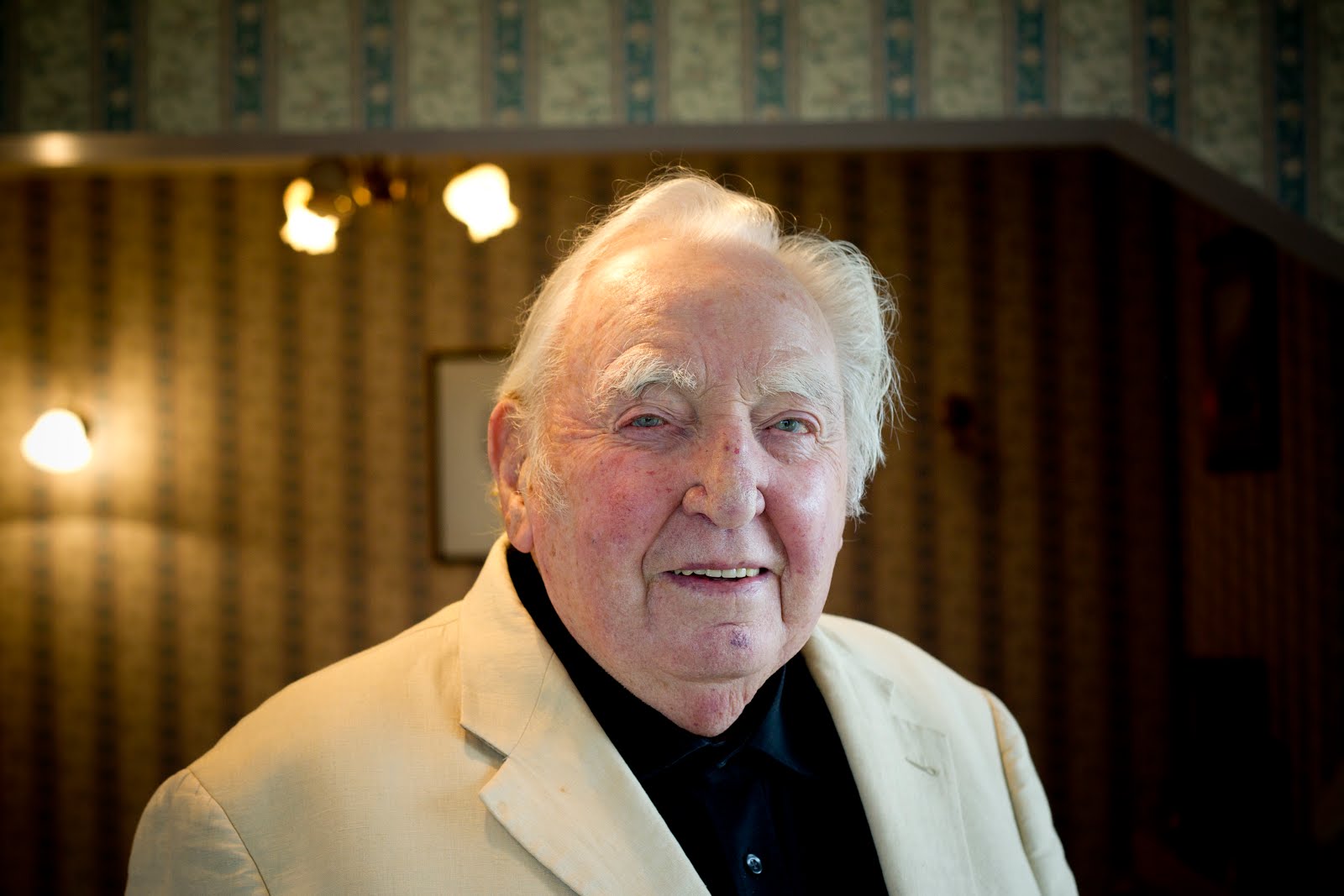
It’s not everyone who gets the chance to meet someone who has rubbed shoulders with George Bernard Shaw, Winston Churchill, Eamon de Valera, Richard Nixon, President John F Kennedy, Erskine Childers, Patrick Hillery, Sean Lemass, Pope John Paul II, Garret FitzGerald, Charlie Haughey, Todd Andrews, Bing Crosby, Grace Kelly.

That was just my good fortune when I called on 90-year-old Niall Weldon (above) in his home in Rush, Co Dublin.

Ireland’s Young Scientist Exhibition will celebrate its 50th anniversary in 2015. This year as a result of an initiative begun in NUI Maynooth, 100 schools in Tanzania took part in the country’s first Young Scientist Tanzania exhibition.
The idea for the Tanzanian project springs from Ireland’s successful Young Scientist Exhibition.

Concern Worldwide sponsored a prize at this year’s exhibition which was held in Dar-es-Salaam. The Concern prize was won by Pamba Secondary School in Mwanza. The prize is called the Concern Niall Weldon Award and this year’s prize was a laptop and a lab-in-the-bag, which is a kit of basic scientific tools to engage or interest young people in science.

Niall Weldon was chairman of the Aer Lingus Young Scientist Exhibition judging panel for 22 years.

Back in 1964 Carmelite priest Tom Burke, a physicist at UCD, visited a science fair in Albuquerque with Tony Scott. On their return to Ireland they looked for a sponsor for a similar exhibition in Ireland and the then Aer Lingus Chief Executive Jerry Dempsey obliged.

The first exhibition was held in Dublin’s Mansion House in 1965. There were 190 exhibits, and seven judges. It lasted three days and approximately 5,000 people attended. It was officially opened by the taoiseach of the day, Sean Lemass.

The success of the exhibition meant it needed a bigger home, Dr Tony Scott, a member of the Royal Dublin Society science committee facilitated its move to the RDS where it has remained to the present day. The 2013 exhibition, now sponsored by BT, will have 1,879 ideas entered from 4,189 students from 32 counties. In recent times over 37,000 attend the exhibition each year.

Although modest in its proportions and aspirations, the inaugural event was considered a worthwhile venture but questions were raised as to its ability to cope with the major scientific and technological developments then taking place nationally and internationally.

“Two important factors provided the exhibition with a sound starting base. Aer Lingus had a small team of highly efficient and dedicated personnel. Secondly we were able to call on the services of as many as fifty eminent scientists from a wide range of institutions to adjudicate on the hundreds of exhibits. These were drawn from universities, colleges, trade and commerce organisations, Government departments, health and hospital boards and a variety of other educational bodies. A point worthy of note here is that all the judges gave their services for free,” Niall recalls.

“Paddy Brennan, who was Company Secretary of Aer Lingus, was appointed chairman of the judging panels at the exhibition. In 1966 Paddy went to work with International Air Transport Association (IATA) and I was appointed Company Secretary and subsequently the job he did at the Young Scientist Exhibition fell to me. I did that job until 1988,” Niall explains.

Niall was born in 1922, attended Rush National School, O’Connell Schools and UCD where he graduated with Commerce and Public Administration degrees. Niall paid a high tribute to his maths teacher, Kit Carroll in O’Connell Schools, who taught him for the Leaving Cert.

“Everyone in our class got honours in maths due entirely to Kit’s teaching brilliance. He also taught Pat Kenny of RTE fame,” he says.
Niall’s late wife, Lily Shiels, was a maths teacher from Ballyboughal and shared first place with Charlie Haughey in her final B Comm. examination at UCD.
Niall’s first full time job was a senior clerkship position in the Turf Development Board, now known as Bord na Mona.

After four years in the Turf Board he joined Aer Lingus. His boss was Michael Dargan, who in later became CEO and later still Chairman of Aer Lingus.
Niall’s first promotion was to fill the post of Administrative Assistant to the London District Manager. He spent two years in London and it was while he was in London that he met Winston Churchill and George Bernard Shaw when deputising for the District Manager who was unable to be present.

“One evening there was a party at the nearby Tea Centre and Churchill had been invited to open it. My boss was sick so I was sent to the party. I was in a line of people and when Churchill heard I worked for Aer Lingus, he asked me if I knew Jack Kelly Rogers. At the time Kelly Rogers was deputy MD of the airline. He had been a sea plane pilot and had flown Churchill to the Yalta conference. I told Churchill I knew Kelly Rogers. I had never spoken to him in my life! I often think of that day. I was much taller than Churchill and was looking down on him when I told my fib.
“When I came back to Ireland I got to know Kelly Rogers and we became friends,” Niall tells me.

The Rush man spent 42 years working in Aer Lingus, retiring in 1988.
The late Patrick Lynch who served as Aer Lingus chairman between 1954 and 1975 suggested to Niall that he should write a book.

“The idea sounded daft as I had never written anything but Patrick prevailed on me. I wrote a draft and gave it to Terry Prone to read. She liked it and, believe it or not, ‘Pioneers in Flight’ sold out,” Niall proudly tells me.

Concern’s Chief Executive Tom Arnold expressed his delight that Niall was willing to allow Concern use his name in their sponsored prize in Tanzania.

Niall Weldon has spent his life developing ideas and fostering growth. He has played a pivotal role in the development and support of the Young Scientist Exhibition.

The nonagenarian is a man of great intelligence, who has used his wisdom and diligence in furthering the development of science and business for the betterment of peoples at home and abroad.

Niall remained as chairman of the judging panels at the Young Scientist Exhibition until his retirement from Aer Lingus. Today, in his 91st year he is keenly aware of the importance knowledge based industries play in the well-being of Ireland.
“The industries of the future and the industries that have a future are knowledge-based. To ensure our place in these industries, Ireland needs not only a grasp of science and technology, but also a planned programme to keep pace with world developments in these areas. The Aer Lingus Young Scientist Exhibition has been a trailblazer that has pointed the way forward for young Irish people.”

Monday, January 14, 2013

A few interesting anniversaries

2013 is the UNO World Water Year. It is the 100th anniversary of Grand Central Station in New York, the 200th birthday of Wagner and Verdi and the cassette recorder is 50 years old - if there are any still about.

Faster Irish Rail services

New rail timetable operative from January 20 will see trains running between Cork and Dublin in two hours 30 minutes. And the fastest trains between Tralee and Dublin will cover the journey in three hours 45 minutes.

Most trains from Cork to Dublin will depart at 20 past the hour.

Irish Rail has restored the 19.20 Cork Dublin service.

But no printed timetables. If you have old ones, hold on to them as they may become collectors' items.

Wednesday, January 9, 2013

Hillary Clinton on girls and women


Before Christmas Hillary Clinton was in Dublin where she spoke at DCU.

Two paragraphs from her speech quoted below.

As the mother of a daughter, and as someone who believes strongly in the right of every person, male and female, to have the opportunity to live up to his or her God-given potential, it pains me so greatly when I travel to places around the world and am received almost as an exception to the rule, where the male leaders meet with me because I am the Secretary of State of the United States, overlooking the fact that I also happen to be a woman. We are on the right side of history in this struggle, but there will be many sacrifices and losses until we finally reach a point where daughters are valued as sons, where girls as educated as boys, where women are encouraged and permitted to make their contributions to their families, to their societies just as the men are.

We have also done a great deal of work to refocus our global health programmes so that we save the lives and improve the health of more women and girls. Health programmes, as you know, can be imbalanced, often in ways that are not obvious, but the result is women and girls don’t get the care they need when they need it, and many die unnecessarily. So our starting point must be this: Women’s lives matter. And promoting the human rights of women begins with saving the lives of women whenever we can.

Tuesday, January 8, 2013

Trials and tribulations at an ATM


The column below appears in this week's INM Irish regional newspapers.

By Michael Commane
Early in December there was a news report in the national newspapers about a new scam at Automatic Teller Machines.

A genuine customer would go to the ATM, place their card in the machine, request a sum of money, nothing happens and then out pops your card. As soon as the customer moves away from the machine the trickster comes to the machine and manages to remove the sum of money that the genuine customer had requested. The trickster had earlier placed some sort of device in the machine which prohibits money leaving the ATM.

The newspaper report, quoting the Garda, warned customers to remain at the machine and telephone their bank while still standing at the ATM.

That advice seemed clear and sensible

On Thursday, December 20 at 14.26 I went along to an ATM in Camden Street in Dublin. The machine was outside the bank and it was the branch’s machine. It is the bank where I have my account.

I was in somewhat of a rush and needed cash in my pocket. I took the usual precaution, covering the pad as I punched in my numbers. I requested €40. No money is spitted out but my card is returned to me. I immediately recall what I read in the newspaper and called the number, which is printed on the reverse side of my bank card.

I was nervous and certainly felt in a vulnerable position. The last thing I was going to do was move away from the machine. I asked the person with whom I was speaking if she would contact someone inside the branch and ask them if they would come out to assist me. My suggestions was dismissed and dismissed in the most patronising way possible. I explained to customer services on the telephone that I had read a report in the national press, which warned people not to leave the machine. Again I was dismissed. I spent over six minutes on the telephone, which cost me €1.72. I had no choice but to go into the bank and explain the situation, all the time worried that I was victim of a scam. A friendly and helpful member of staff explained to me that the machine was new and was causing teething problems. I did tell them about the story I had read in the newspaper and suggested that they should have some sort of notice on the machine screen explaining the situation. But not a word on the screen.

I was angry not because the machine had failed but because of the patronising and dismissive way I was treated by on the telephone by the bank.

Later that day I reported the incident to the bank. I was told I'd be contacted within five working days. It is now Friday, January 4 and so far I have received no call.

The bank is currently running a catchy advert on television. The ad alludes to the recent banking failures but assures viewers that it is rebuilding and making sure to take care of all their customers. It uses the words "commitment" and "guidance". And then it finishes with the words, "for small steps, for big steps, for life" on the screen while a voiceover speaks the words.

Well, let me assure you the last thing the bank did for me that day was offer me guidance or commitment.

It's the gap between that advert and the experience I had some days earlier that I find so annoying. And it is a phenomenon that exists right across our society at every level - the words of spoof and appearance and then the reality, which is something altogether different.

I have been a customer of the bank for many years. I have never been in dispute with them and generally they have treated me well. But I am finding more and more when contacting customer services of any of the facilities we use, it can be tedious and frustrating, indeed nightmarish.

And right now I'd expect the banks, above all, to be that little bit chastened and maybe even humble in their dealings with their customers.

Note. Yesterday, Monday, January 7 I received a letter from the bank informing me that they were looking into the matter. This piece had been sent to the newspaper long before I received the letter from the bank.

Saturday, January 5, 2013

Unwise to dismiss the ordinary

Below is the Thinking Anew column in today's Irish Times.

By Michael Commane
For the next six months garda outriders will be guiding sleek black cars through Dublin's junctions. To the annoyance of some motorists these cars will be ushered through red lights on their way to EU meetings in Dublin Castle and Government Buildings.

The elected governments of the 27 European Union states and their officials
will be meeting in Dublin between now and June as Ireland takes on the role of presidency of the EU.

Dublin is the city where the talking will take place. Here democratically elected representatives of 502 million people will barter, hassle, argue, discuss and plan for the future.

We can never ever underestimate the privilege it is to be able to discuss,
talk and share ideas in a free and open environment. In spite of all the current hardship and recession we should count our blessings and appreciate our freedom and democracy.

The reality that people can express their ideas and beliefs in freedom is very precious. We can share our ideas and opinions knowing that there will never be a knock on our doors in the middle of the night to take us away to the secret police. It might well be easy to take it for granted but that freedom is something for which people have fought hard.

It's a long time since I was introduced to theology and philosophy and sadly
much of it has now evaporated out of my system through the passing of time.
But somewhere in the deep crevices of my head I can still recall learning something about the sensus communis. From what I can recall, it is the idea that in a free and open society there is a commonsense among the general public, that most people know what's right to do and know how best to deal with situations as they arise.

It's never a good idea to dismiss that “commonsense” that prevails among the
general public. And because of that it is important that governments and ruling authorities have the wisdom and foresight to keep a keen eye on what the “ordinary people” are thinking. That applies to state and church.

Watching Christmas Mass on television from St Peter's basilica in Rome I was
struck by the power and glory of it all. Liturgical ritual can be most inspiring and it's often said that no one does it better than the Catholic Church. It might well be true. Indeed all liturgies can be most inspiring.

Public prayer done well can help us on our life-long journey to the discovery of God.

Tomorrow we celebrate the feast of the Epiphany of The Lord - the making
manifest of God to the world. No, God does not turn up at the doors of the
high-ranking priests and scribes to announce his arrival. Instead ordinary
wise men make the discovery of his presence in the world.

"When King Herod heard this he was perturbed, and so was the whole of
Jerusalem. He called together all the chief priests and scribes of the people, and enquired of them where the Christ was to be born." (Matthew 2: 3 - 4) And then later in a dream the wise men are told to avoid Herod and stay well away from him.

The Epiphany is the story of how God offers himself to all mankind.

Significantly he doesn't go along to any elite group. Instead he makes himself known to “ordinary people”. Surely that's a lesson for all people who are in positions of authority and influence. It might also be a hint to all of us never to underestimate the common good sense of the “ordinary
people”.

Might it be that the current economic crisis that rages world-wide is someway linked to a small self-appointed elite group believing that they 'knew best' and forgot to take account of the views and opinions of the “ordinary people”.

And is it possible to say the same in the domain of religion: ministers of religion pay far too little attention to the views and beliefs of ordinary good living, holy people? It's far too easy, almost a cliché, to say the “world” is all bad and “we” are right.

Of course in any healthy society there will always be tension between the various groups and factions. But tomorrow when we celebrate the Feast of the Epiphany of The Lord surely it is important to ask why God was made manifest in such a way? God chose the “ordinary people” over the elites.

The comings and goings in Dublin Castle and Government Buildings for the next six months are very important. Hopefully the elites going through all those red traffic lights will make wise judgements, which will work for the better of all peoples. Also important is our public prayer in such places as St Peter's and Canterbury. We need our governments, our priests too, but
there can never be a break between our public prayer and the lives of the “ordinary people". The Epiphany insists we link the two together.

Thursday, January 3, 2013

New bus connections in Germany

As and from January 1, the bus market in Germany has been liberalised. It means regular bus services are now operating between all German cities, indeed one services is between Cologne and Latvia.

Fares are less than half railway tickets.

German Rail has a new serious competitor.

A railway without a timetable

Irish Rail has discontinued printing timetables. A bad decision.

Most regular rail passengers will know there is an hourly service between Dublin and Cork. But say someone wants to break their journey in Thurles and then stop at Mallow, how are they to know what trains stop at the intermediate stations?

Not all people have internet and certainly not everyone has a smart phone with internet connectivity.

One of the speical features of rail travel is linking smaller places to bigger towns.

Irish Rail made the decision to stop printing timetabes as a cost cutting exercise.

It would be interesting to do a costing of the purchase of their Spanish rolling stock which are hauled by GE locos. The unit was never to have been used as it is. The Spanariads originally designed those coaches to have power units at each end. It never happened.

And does anyone remember the silly curtains that disappeared after a month?

Platforms 10 and 11 at Heuston?

Empty trains that run between Limerick and Ballybrophy via Nenagh? A ghost train from Limerick Junction to Roslare Harbour?

Empty car park spaces?

How much did it cost to change the parking system at Heuston?

Will there be a word of protest from the travelling public?

Did the Transport Minister give his approval?

Monday, December 31, 2012

Angela Merkel quotes Greek philosopher on negotiations

Before the main news bulletins this evening, German television stations carried German Chancellor Angela Merkel's New Year's Eve address to the German people.

"Fifty years ago this evening 'Dinner for One' was first performed in Hamburg, It was the first day of the German Football League. In 1963 John F Kennedy said his famous words: 'Ich bin ein Berliner' at the Wall in West Berlin. Also that year Germany and France signed the Elysée Treaty. For France Charles DeGaulle signed and Konrad Adenauer signed on behalf of the German people."

She quoted Adolf Kolping's line on how people who show courage create a brave society.

"Every day families carry out extraordinary acts of kindness towards their children and family members. Trade unionists and employers help create an environment where people can work in security and respect. They make our communities human and successful.

"Germany is experiencing the lowest unemployment rate since the unification.

"Next year is not gong to be easy, economically it is going to be more difficult than 2012.

"In recent days I met a 10-year-old boy who was born almost deaf. Now as a result of great medical progress he can enjoy listening to an orchestra.

"I also met a woman who underwent major heart surgery and is now living a normal life. Just two examples of the the results of our scientific progress.

"Research in our country means jobs and security.

"We have to balance our books and our economy has to be returned to financial rectitude. We need patience and the crisis is far from over. We still have not learned all the lessons from the banking failures of 2008. Our reforms are working but there are very difficult days ahead.

"In these days we particularly remember those who help make our country a secure and safe place to live, our soldiers and police, who serve our country, especially those who are on service abroad."

She quoted from a Greek philosopher, who said, "Courage* is at the beginning of negotiations and happiness at the end."

"Ideas and innovation help make our country a progressive, human and successful society.

"I wish you all a happy and peaceful New Year and God's blessing."

*The German word for 'courage' is 'Mut'. But the German word for 'anger' is 'Wut'. In Frau Merkel's address it would be quite easy to think she had said 'Wut' rather than 'Mut'. At least for the hard of hearing.

Wednesday, December 26, 2012

The TV charm of Moya Doherty

Occasionally one comes across something on TV, watches it for a second or so and then says, gosh, this is great television.

She is a woman who is known and recognisable to most Irish people. I had heard her name regularly and often, knew something of her work, but knew nothing about her.

On the RTE News Now channel late on Christmas night Mike Murphy was interviewing Moya Doherty.

I repeat, I know nothing about her but her screen performance on RTE was simply spectacular.

Her clarity, her articulation, her charm, how she spoke about her parents, some of the best I have seen.

Monday, December 24, 2012

German archbishop speaks out on social issue

The Archbishop of Freiburg and President of the German Bishops' Conference in his Christmas address said that there should be no taboo on behalf of the German State in placing higher taxes on the rich.

Archbishop Zollitsch would be considered to be one of the more liberal German bishops.

What senior Irish cleric has said something similar this Christmas?

Christmas past and present

I remember the Christmas Santa brought me a bus. It was fitted with battery operated lights. I spent most of that day down on my hunkers 'driving' the bus around the floor. It so happens that right now I'm sitting in the room in which I unwrapped the parcel that contained that bus.

And all the blather I have heard between that day and now. Of course I have heard good words too. But.

My late parents always come to mind at Christmas. They were completely different to one another. My mother burned her bra before Irish women were wearing them and Dad was a gentle soul. That's not to say Mum was not gentle and my father was not strong-willed. Anyway, what's 'gentleness'? I have met the biggest hoodlums, who in the common estimation of 'men' were 'gentle' and 'kind'. The 'holy' ones too.

The main 'thing', maybe the only 'thing' I know about holiness is the lives my parents lived.

Earlier this year a senior cleric referred to the hard work and holiness of a priest. I was fascinated by the comment and spent many hours thinking, laughing, comparing the 'holiness and hard work' of the priest with the holiness and hard work of my parents.

For me the moral of the story was and is, we priests need to be careful with our words.

In the name of my parents and in their memory, happy Christmas to readers of this blog.

Saturday, December 22, 2012

The Madonna of Stalingrad

An icon of the Madonna of Stalingrad hangs in the Gedaechtnis Kirche in Berlin.

It featured significantly among the troops of the Sixth Army in the days before Christmas 1942. The army was encircled by the Soviet Army.

On Decembr 23, 1942 it was officially announced that the rescue attempt by Manstein's army had failed. It would be another two months of senseless slaughter before Paulus surrendered.

One million dead, 90,000 German troops were taken prisoners of whom 6,000 survived and returned to Germany.

Soldier Rocholt was one of the last prisoners-of-war to return home from the Soviet Union in 1954. But he decided to detrain in East Berlin and live in the GDR.

Later he returned to Fulda to his fmaily and rediscovered his belief in God, which he had lost in Stalingrad.

He along with a number of survivors from Stalingrad made an annual pilgrimage to the cathedral in Trier where they prayed to the Madonna of Stalingrad.

Do we, the citizens of the EU, ever appreciate our good fortune?

Friday, December 21, 2012

The madness of blind 'obedience'

These days 70 years ago on the Volga there were those German soldiers who knew the game was up and realised the stupidity of the leadership in Berlin. They had the sense to realise they had been fooled and duped and were naturally angry with their situation.

Their letters home tell the story.

And there were those who continued foolishly to believe that Hitler would rescue them from their plight.

Sad to say it, but they were clowns, misguided men who placed such idiotic trust in a crazy leadership, a leadership that was all spoof, rhetoric, sometimes even fine sounding words.

And many of these men had given it their all. They were not all bad men. How could they have been? But of course there were the nasty ones there too, who found protection in the midst of all the madness and stupidity.

But outside the world of Nazi Germany ordinary women and men, both inside Germany and internationally, knew it was all a sham, bad stuff too.

Maybe the moral of the story is to appreciate and respect the ordinary good sense of the 'ordinary' people. And always be suspect of authority.

Thursday, December 20, 2012

Crossings gone and no need for the Kursbuch

Berlin rail station, opened in 2006, is
on the site of the old Lehrter bahnhof.
In the mid 1980s I lived in Berlin, Moabit to be exact. It was a 15 to 20 minute walk to West Berlin's main rail station at Zoologischer Garten. It must have been one of Germany's most run-down stations, at least stations served by Deutsche Bundesbahn, now called Deutsche Bahn. Clever Germans, they managed to keep the DB brand. Ironically the former communist GDR continued to call their railway Deutsche Reichsbahn, DR, German Kingdom Railways.

DB was not allowed bring its ICs or ICEs into West Berlin. Nor were they permitted to haul their trains with DB locomotives. All trains in and out of Berlin were pulled by Deutsche Reichsbahn locomotives. Trains from and to West Berlin from the Federal Republic had to have their locos changed on the German German border. Marienborn/Helmstedt, Gerstungen/Bebra, Probtzella/Ludwigstadt, Schwanheide/Buechen are those rail crossings on the inner German border that will be etched in my memory for ever.


Trains could be held at these crossings for long periods of time and if the two Germanys were in dispute then no-one was in a hurry to give the train clearance.

And the loco change happened before the train arrived in the station. That change happened in no-man's land.

The barriers, the Vopos in their green uniforms, jackboots and peaked caps. And then the portable tray/bag they carried with all their official documents as they moved from passenger to passenger. That very special East German look to make sure you were the person whose picture was on the passport. The loud speakers welcoming rail passengers 'auf dem Territorium der Deutschen Demokratischen Republik'.

It's all gone. Marienborn, all of them gone. And Friedrichstrasse, sanitised beyond belief.
For years and years one of the last things I did when leaving Germany was to buy that huge magic book, Das Kursbuch - the complete rail timetable for all DB traffic, national and international. Indeed, on one occasion a DR loco driver gave me a DR Kursbuch, which I still proudly possess. And probably never do it again; travelled from Hamburg Altona to Dortmund in an ICE loco on a quiet Sunday morning.

The GDR is gone and all the information that was in that Kursbuch, which I spent hours upon hours reading and studying is no longer needed, maybe not even available. It can all be checked on the DB app.

Right now I can see that ICE 848 is due to leave Berlin Hauptbahnhof, a spectacular building, at 13.35 and will arrive at Frankfurt-am-Main Airport in four hours 35 minutes. Just one change at Frankfurt-am-Main HBF.

That's life.

Wednesday, December 19, 2012

In the US they are tragedies, in Pakistan mere bug splats

Obama has said nothing about
the drones killing children
Yesterday's Guardian has a not-to-be-missed piece on US drone attacks in Pakistan. The article is written by George Monibot.

He talks about Barack Obama's words at Newtown Connecticut. He argues that what applies to the children in Connecticut murdered by a deranged young man also applies to the children murdered in Pakistan by a somber American president.

The people who operate the drones, according to Rolling Stone magazine reports, describe their casualties as 'bug splats', "since viewing the body through a grainy green video image gives the sense of an insect being crushed".

Obama's counter-terrorism adviser Bruce Riedel explained that "you've got to mow the lawn all the time. The minute you stop mowing, the grass is going to grow back".

For John Brennan, Obama's counter-terrorism assistant, the people of north-west Pakistan are neither insects nor grass: his targets are a "cancerous tumour".

Monibot writes: "Beware of anyone who describes a human being as something other than a human being".

It certainly puts a new perspective on Baracak Obama's words and tears in Connecticut.

Tuesday, December 18, 2012

Getting language right - what's the significance?


I have a letter from a priest where he writes its'.

The column below appears in this week's INM Irish regional newspapers.

By Michael Commane

A Dominican colleague called me last week to point out that I had misused the word ‘pious’ in something I had written for a national newspaper.

I think I can call him a friend so there was a bit of banter between the two of us. I immediately made for the dictionary.

The sentence he was quibbling about ran, “That’s why so much pious talk is cant and humbug.”

He argued that I was pious.

As so often is the case with English words, the word has many meanings. My Collins dictionary gives two meanings for pious, 1, religious or devout, 2, insincerely reverent; sanctimonious. Now, does that not make the word meaningless as both those meanings seem to express opposite or at least mutually exclusive ideas?

In my job working in a press office I am regularly using the dictionary and I am amazed at how confusing the English language is. Is bi-monthly twice a month or does it mean every two months? My dictionary says: 1, every two months, 2, twice a month. But a bimonthly publication is published every two months.

Did you know that flammable means readily combustible. But that’s exactly what inflammable means too.

Are you confused? I certainly am.

And before I write another word and still on the letter ‘f’, did you know that ‘fulsome’ means excessive in an offensive or distasteful way. But it has a second meaning, ‘extremely complimentary’. Can it get more confusing than that?

And ‘presently’ does not mean ‘at present’. It means in the immediate future. RTE’s Morning Ireland always uses the word in its ‘pure’ sense. Those of you who may remember David Hanly presenting that programme will recall how he always used the word to indicate something that would happen in the immediate future. The Morning Ireland team have, or should that be ‘has’, remained faithful to Hanly.

I spotted that horrible redundant apostrophe on Sunday – ‘Christmas tree’s’ for sale. For the life of me, I do not understand how someone can make that mistake. Why throw in an apostrophe just because the word is plural?

It seems ‘it’s’ is a bogey word with many people. When is it ‘its’ and when is it ‘it’s’? I know a priest who never gets it right. But he developed a clever compromise and decided to put the apostrophe after the ‘s’, so he writes its’. He has a penchant for boxing clever (or should that be ‘cleverly’. And it has done him no harm at all.

It’s almost impossible to go into a supermarket without spotting ‘1000’s of items ....’ Why in heaven’s name an apostrophe? It should not be there. It is plural. End of story.

And then there are those who write ‘He lived in the 1960’s’. Can anyone explain to me the reason for that apostrophe?

The late Con Houlihan once quipped that a man who will misuse an apostrophe is capable of doing anything. The same law I think applies to the apostrophe.

And then whether it is ‘me’ or ‘I’.

‘It’s me’ has become so widespread that it now seems to be the norm. A new book on the shelves this month has the title ‘Catholicism and me’. Why the use of the accusative case when it is clearly the nominative case?

Maybe all grammar is in process and changes with use? I’m not too sure about that.

It is now becoming more and more common for RTE journalists to mix up the past participle of the verb with the simple past tense - I heard a reporter say some weeks ago, ‘They done it’.

Okay, I can hear you say, ‘so what, who cares’. And there might well be a point to that. But how would you react if someone came along to you and said, ‘Me am going to town today’? You’d be puzzled.

But there is more to it than that surely. How many people are inclined to make judgements on people the moment they hear their accents? And when those same people intersperse their sentences with ‘I done this and I done that’ people quickly form opinions, right or wrong.

Is language, accent, the words we use a giveaway?

It’s my last column here before Christmas, so happy and holy Christmas to all readers. And by the way had I said Xmas there would be nothing secular about it at all as the ‘x’ comes from the Greek letter Chi, which is the first letter of the Greek word Χριστός, translated as ‘Christ’

Prosperous New Year too.

Different rules for different people

On Saturday evening in an inner-city church in Dublin at the beginning of Mass the celebrant made what he thought was a smart comment about the colour of the vestments he was wearing - pink. The comment was distasteful and inappropriate and not at all funny.

At the funeral Mass of Paidi O Se in Ventry today one of the many eulogists interspersed his words with 'Christ'.

That's all fine. And the funeral Mass was a real community celebration. But how many of us have heard tales of priests refusing family members to speak at funeral Masses.

And the comment of the priest in the Dublin church will go unchallenged. No one will dare say a word. It would not be polite.

The world well knows there are two rules one for the rich and one for the poor.

And certainly right now within the Irish Catholic Church those who control and are in positions of 'authority' seem to be able to do as they wish. And do it with such arrogance.

Might the lesson of it all be, 'Cast a cold eye on life on death, horseman pass by'.

Saturday, December 15, 2012

German obsession with Jews

Interesting if disturbing piece in today's Irish Times.

Derek Scally, the paper's German correspondent, reports on the new controversial book on Germany by Israeli born Tuvia Tenenbom.

Tenebom is a self-confessed Germanophile.

A woman in Bavaria tells him that "everything in America has something to so with to do with Jews". A nun informs him: "All over the world the Jews are united."

He argues that a terrible collection of cultural cogs clicked into place for Hitler in Germany: overbearing righteousness and naivete, a love of absolutism and consensus groupthink rather than individual decisions and personal responsibility.

Tenenbom believes these 'cogs' still whirr today - ouf of sync for now but not necessarily forever.

He concludes: " I have always thought great things of the Germans .... and I always defended them when people said they were Nazis.

"I didn't think that this book would contain more than three pages about Jews if at all .... but the obsession with Jews here is frightening. I so much wanted it not to be that, but this is what it was."

Thursday, December 13, 2012

Information and tweaking

Word verification has now been enabled on this blog. Also under consideration is to block anonymous comments but no decision yet made.

This blog is read in 138 cities around the world. It is blocked by the authorities of the Islamic Republic of Iran and some months back a letter criticising work by the author appeared. The letter was written by the then parish priest of Cahersiveen, who has now been appointed bishop in Cloyne.

Wednesday, December 12, 2012

The late Mick Cleary and all the nonsense

The late Fr Mick Cleary
The words, sentiments and behaviour of some of the clergy people as shown in last evening's documentary on RTE Television must leave people wondering about the Irish church.

The appearance of Michael Cleary, his silly words, ridiculous attire, his adoring fans and all the nonsnese that surrounded him and many of the clerics was profoundly sad.

It is also interesting to compare the attitude of many the clergy people of that time with the attitude of many of the current commentators, who appeared on the programme.

Is it possible to replace the word attitude with 'arrogance'?

But surely anyone who is out and about 'shouting' about their take on anything, whether it is religion, morality, ethics, that crazy word, 'evangelisation', anyone, who sets himself/herself up as a 'guardian' of how things should be are really all 'templates' of the likes of Mick Cleary.

The strident, the dogmatists, the functionaries come and go, usually full of their own importance.

Mick Cleary, his roman collar, his silly black fake leather coat with the fur collar is most likely the same old game as those who prance about in religious gear in the new attempt to appeal to the adoring crowds.

Is there any difference? All making themselves noticed.


Tuesday, December 11, 2012

TV thriller highlights our subjectivity

Difficult to know if Carrie's love/lust
for Brody is all for the good of the CIA?
This column appears in this week's INM Irish regional newspapers.

By Michael Commane

The current US espionage thriller, ‘Homeland’, which is showing on RTE Two on Tuesday evenings, is the highlight of my week. How sad can you get?


For those of you who are not watching ‘Homeland’, putting it as simply as possible: it’s about US Army Sergeant, Nicholas Brody who was captured while on service in Iraq. He converted to Islam and became a fanatical follower of Abu Nazir, who plans to hit the US. Brody is to play a pivotal role in the attack.

A US drone mistakenly killed a group of children, including Nazir’s son. The ‘incident’ was kept under wraps. The episode plays a significant role in Brody’s conversion to Islam.

Brody comes back to the US. A plan is put in place to kill a number of high-ranking people, including the US Vice President. Brody funks it and the CIA get him on their side. He becomes a double agent. There are so many angles, sides and corners to it that you would really need eyes at the back of your head to follow it.

At times it seems xenophobic. But it also highlights the CIA as not being too worried about obeying the rule of law.

The main CIA character, Carrie Mathison has a tryst with Brody. At this stage I'm not sure whether or not it is genuine love/lust or for the sake of the CIA. She also happens to be bi-polar. It’s interesting to see how her bosses at the CIA treat her when this becomes evident. Her protector Saul Berenson is always there to help and support her. So far he’s the wise counsel in the series. But last week he falls victim to mysterious double dealing.

The CIA, at least according to ‘Homeland’, has no problem living by the rule of deception and lies. Of course, it’s all for the greater good and honour of the land of the free and the home of the brave.

Brody’s wife, Jessica and Carrie are very good looking women. I’m sure many of the men are too.

There are so many silly scenes - CIA agent Carrie, chasing a helicopter in a field in the middle of nowhere. The death of the VP is caused by a remote control attack on his pace maker. Surely a warning there for anyone who has a pace maker. I joke of course.

In a previous episode, a number of terrorists shoot up CIA personnel. They come in, blazing submachine gun fire. And believe it or not Peter Quinn, a central CIA figure, bleeding from the mouth, miraculously walks away.

So what is it about it that has me glued to the screen on Tuesdays? Suspense, the goodies versus the baddies, the aura of secrecy, interesting characters. But it is also bizarre and somehow or other there is something about the bizarre that forever attracts us.

Maybe after all it is xenophobic. At least so far the goodies are the Americans and the baddies are the ‘foreign terrorists’. You are led to believe that the nastiness and ugliness of ‘the goodies’ is bearable and deep down they mean to do the right thing. So far all the ‘baddies’ seem to be from the Middle East or Americans who spent some time there.

Anyone who has been following what is happening in real life to US army private Bradley Manning is bound to look at the world of power and politics with a jaundiced eye. Manning is in jail for over two years since he was accused of intelligence leaks to the WikiLeaks website. As a young man he was bullied because of his sexual orientation. In the last two years he has spent long periods of time in solitary confinement. And this is not a television series. It is for real

How we are all children of our environment never ceases to amaze me, whether it is to do with our family, our school, our town, our religion, everything.

It is the prophet and the bravest of the brave who dare attempt to look out over the parapet.

Maybe, in some amazingly artistic design, ‘Homeland’ wants us to see how we all suffer from terrible bias, subjectivity and brain washing.

After this there is to be another series; number three. OMG.

Monday, December 10, 2012

Forty-five TV minutes with Merkel

On Monday evening German television screened a fascinating 'What makes Merkel'.

The prgramme began showing the German Chancellor in her spacious office in Berlin.

On one occasion during the euro crisis she cancelled a meeting with Federal State premiers and spent hours in her car in Berlin calling EU ministers. Photo journalists were expecting her to call at a certain place, instead her car passed at great speed.

It went on to describe how she wheels and deals behind closed doors and tells another story in public and in parliament.

It cited how she dealt with the euro crisis in 2010 and how she handled the loan to Greece. And then the referendum in Greece, which she heard about through the press.

It showed how Merkel supported Sarkosy in the run-in to the French election. He lost and Merkel would pay the price.

The prgramme explained how Merkel did not get her way at the EU Heads of State in 2011. It was Hollande's first EU meeting.

German civil servants had decided that if Greece were to leave the EU it would be catastrophic for the EU and Germany. Just in those days Samaras visited Merkel in Berlin. But Merkel was still saying publicly that Greece could leave the EU.

At one stage in the crisis, Jens Weidman, head of the Federal German Centrall Bank was on the verge of resigning.

Peer Steinbruck, the SPD chancellor candidate for the 2013 elections recognised that the situation in Europe is now far more stable than in 2010.

The 45-minute programme never once mentioned one word about the situation/crisis in Ireland.

GOP's bedfellow

Maureen Dowd's piece in today's Irish Times is a good read.

Well worth comparing her picture of the GOP with some aspects of right wing Catholic thinking.

Saturday, December 8, 2012

Straightening the way


A great day's cycling from Tallaght to Donard and then a
climb to the top of Lugnaquilla and cyle back to Tallaght.

Today's Irish Times Thinking Anew

By Michael Commane

If I were asked what were the great memories of my early days in the Dominican Order I would immediately say the introduction I got to cycling and walking in the great outdoors.

Indeed, before joining I did cycle to and from school and spent the summer holidays in the country, but the idea of cycling 100 kilometres or more in a day was foreign to me. So too were expeditions that meant climbing mountains more than 1,000 metres high.

The excitement, the annoyance, the sheer toughness of a day’s hike is an incredible experience. The same goes for a long cycle. The next uphill climb fills one with fear and trepidation. Then the downhill and speed of it is nothing but sensational. And the same goes for getting to the top of a mountain. Pure exhilaration.

In tomorrow's Gospel we read those familiar lines: “A voice of one that cries in the desert: Prepare a way for the Lord, make his paths straight! Let every valley be filled in, every mountain and hill be levelled, winding ways be straightened and rough roads made smooth, and all humanity will see the salvation of God.” (Luke 3: 4 - 5)

When one has spent six or seven hours walking in rough terrain a magic wand that would fill in valleys and straighten hills would be much appreciated. But that’s not the way it is. And no one ever goes out on a day’s walking ever hoping or expecting something like that to happen.

As Christians we believe that after death all the mountains are straightened out and the valleys filled in but before that final call we are destined to experience every sort of turn and curve, sudden climb and sharp descent. It’s the way of the world.

There is something in the adage that life is a valley of tears. Maybe that hits us more forcibly as we grow older. Young healthy people consider themselves almost indestructible. But all we have to do is look about us and see the suffering that exists in every nook and cranny of the world about us.

Every night on television we see horrific pain and slaughter meted out to people, irrespective of age, gender, geographical setting.

One in five children in Ireland goes to bed hungry and one in seven people in the world has not enough to eat. There’s no need for such suffering and yet it happens.

Individually each one of us is called to play our part in straightening the roads, filling in the valleys and levelling the hills. Of course there is never going to be perfection on this earth of ours. But that does not mean we should not try to fix things, making things better for those who are in pain and suffering, for those who are mistreated and misunderstood.

The one who cries in the desert is the precursor of Jesus. Far too often it is inconvenient to listen to the prophet, to listen to the person who is talking out of synch with the prevailing fashions.

There is nothing level and smooth about the world and the lives we live.

Constantly we are challenged to go a step further, to take risks, to walk the unexpected road, all the time trying to understand things better so that we can come to the help and assistance of others.

Advent is a fitting time to see the world as it is, with all its pain and suffering and joy too. In many ways you could say it is similar to that feeling on the mountain. That’s why so much pious talk is cant and humbug. But we believe in paradise, there the valleys are filled in and the mountains levelled.

We are taking part in in a process. In the meantime we take the good with the bad, all the time trying to improve things, especially for those less fortunate.


Thursday, December 6, 2012

Concern award for Hillary Clinton

Concern Worldwide, Ireland’s largest international humanitarian organisation, today awarded US Secretary of State Hillary Clinton with its inaugural Fr Aengus Finucane Award for Services to Humanity.

The CEO of Concern, Tom Arnold, presented Ms Clinton with the award in front of an invited audience, which included members of Fr. Finucane’s family, at a special presentation in The Helix, Dublin.

Fr Finucane worked with Concern from its earliest days in Biafra in 1968 and served as Chief Executive from 1981 until his retirement in 1997. He was Honorary President of Concern US from 1997 until his passing in October 2009 and contributed immensely to building the Concern organisation in the US.

In presenting the award to Secretary of State Clinton, Concern CEO Tom Arnold said: “Concern wanted to find an appropriate way to honour the life and work of Fr Aengus, taking into account the wishes of his family. We decided to institute the Fr. Aengus Finucane Award for Services to Humanity and we’re delighted that Secretary of State Hillary Clinton has agreed to accept the Inaugural Award.

“The reason Concern want to recognise Secretary of State Clinton with this award is because she has put development at the heart of US foreign policy. In particular, she has put a huge focus on policies to improve nutrition for pregnant women and children. Her leadership on this issue has inspired other political leaders to introduce policies which will improve the lives of tens of millions of women and children. The US and Irish governments have worked closely together to promote this noble cause.”

“The whole purpose of Fr Aengus’s life was to improve the lives of others,” Mr Arnold added. “He had a passionate commitment to the education of girls, seeing this as the foundation for the future well- being of families and the wider society. It is therefore entirely fitting that Secretary of State Hillary Clinton is the Inaugural recipient of the Fr Aengus Finucane Award for Services to Humanity.”

Ms Clinton spoke inspiring words and concentrated on human rights, stressing the importance of treating women and girls with equal dignity with men and boys.

John Bruton launches book

Former taoiseach John Bruton launched John Maher's book, Catholicism and Me at the Dominican Priory in Tallaght last evening.

Mr Bruton spoke about being a Catholic and how important it is for us to be public about our faith. He said he could not imagine that could not be a God.

He also referred to the current abortion discussion that is taking place in Ireland.

The book is a compilation and Mr Bruton referred to many of the contributors in hsi address.

Wednesday, December 5, 2012

Tuesday, December 4, 2012

Whether we stand or kneel; probably best to laugh

Isn't it always the little things that give us away. Sometimes they may not be so 'little at all'.

During Mass in a church in Newbridge at the weekend the presiding priest berated the people for not adhering to the new liturgical rules, which he pointed out, are now one year in operation.

"We were chastised for not standing or kneeling at the appropriate time. And it was the way he said it. I'll certainly let him know what I think," the comment of someone who was at the Mass.

Saturday, December 1, 2012

A strange mix of title and dress

In most Irish newspapers today there is a picture of Sister Mary Teresa Grogan.

Yesterday the Mercy sister was found not guilty of indecent assault charge,

The 62-year-old woman had been accused of indecently assaulting seven girls at a primary school in the midlands more than 35 years ago.

Sister Grogan joined the Sisters of Mercy in 1966 as a 16-year-old girl.

She was given the name Sister Peter.

The picture in today's papers shows an elegant woman but somewhere or other in those eyes there seems to be a sadness. Maybe even fear.

She is wearing a black coat, red scarf and carrying a hand bag slung over her left shoulder.

Has anyone asked how come a girl of 16 is taken off to live a life that, at least, is strange. And then to be given the name of a man. She was given the name Sister Peter.

And no one blinked an eye.

The women were given the names of men and the men were asked to go about dressed as women.

What in God's name has all this to do with the Gospel.

Surely an aberration.

Featured Post

Garda car outside Russian embassy with wrong address

 A Garda car is permanently stationed outside the embassy of the Russian Federation on Orwell Road. During daytime hours there are two garda...