On this date, January 23, 1950 the Knesset announced that Jerusalem was to the the capital of Israel.
Tuesday, January 23, 2018
The ancient city of Jerusalem
President Donald Trump's recognising Jerusalem the capital of Israel has brought the ancient city into the news.
Monday, January 22, 2018
'A Dialogue of Hope'
A fundamental feature of a successful democratic society is the requirement for empathy.
One of the duties of a citizen in a democracy is to learn what it is to be someone not like oneself. And to be aware of the impact of choices that one makes on the lives of others.
- Dermot McCarthy, former Secretary General to the Government.
It is a quote from his article 'The Signs of Our Times', which appears in 'A Dialogue of Hope'
Other contributors are: David Begg, Michael Cronin, Iseult Honohan, Dermot A Lane, Fergus O'Ferrall and Gerry O'Hanlon.
The book is Messengar publication.
Sunday, January 21, 2018
SPD says yes
The SPD meeting in Bonn this afternoon decided by 56 per cent to enter negotiations with the CDU and CSU to form a coalition government.
Andrea Nahles, a senior party member and an acting Government Minister, made an extraordinary appeal for the SPD to enter the negotiations. It was television at its best.
When the negotiations are concluded they will be brought back to the membership of the SPD, who will vote on the programme.
It might be April before there is a new government on the Spree.
State pays landlord €1,000 monthly for tiny hovel
The average monthly rent paid by the State to landlords under the rental scheme is €1,266.
Some weeks ago I was in flat paid for by the State. The bedroom was so small that all that could fit in the room was a mattress. It was a tiny flat, a hovel. The young couple who live in it are vulnerable people.
They told my colleague and me that the landlord earns €1,000 per month for the accommodation.
'Modern Ireland'?
Saturday, January 20, 2018
The Wannsee Conference
Today is the 76th anniversary of the Wannsee Conference.
On January 20 1942 in the Berlin suburb of Wannsee German officials discussed and decided how to implement the 'Final Solution to the 'Jewish Question'.
Reinhard Heydrich chaired the meeting. Hitler did not attend.
The Wannsee building surrounded by villas and expensive homes is now a Holocaust memorial.
The Wannsee building surrounded by villas and expensive homes is now a Holocaust memorial.
Thursday, January 18, 2018
Two days with fewer than twenty-four hours
This article appeared in The Tablet last week. Its length is out of bounds for this blog but it is such a worthwhile read, here it is. Not to be missed.
'I HAD NEVER HEARD SILENCE SO SOLID’: A PALLIATIVE CARE SPECIALIST REFLECTS ON LESSONS LEARNT FROM LISTENING TO THE DYING
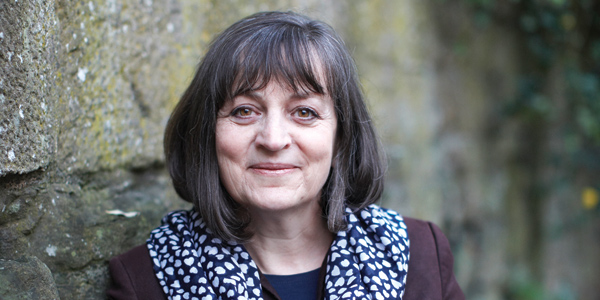
I first saw a dead person when I was 18. It was my first term at medical school. He was a man who had died of a heart attack on his way to hospital in an ambulance. The paramedics had attempted to resuscitate him, without success, and the emergency department doctor whom I was shadowing was called to certify death in the ambulance, before the crew took the body to the hospital mortuary.
It was a gloomy December evening and the wet hospital forecourt shone orange in the street-lamps; the ambulance interior was startlingly bright in comparison. The dead man was in his 40s, broad chested and wide browed, eyes closed but eyebrows raised, giving an impression of surprise. The doctor shone a light in his eyes, listened over his chest for heart or breath sounds; he examined a printout of the ECG from the last moments that his heart was beating, then nodded to the crew. They noted the time of this examination as the declared time of death.
They disembarked. I was last out. The man was lying on his back, shirt open, ECG pads on his chest, a drip in his right arm. He looked as though he was asleep. He might just wake up at any moment, surely? Perhaps we should shout in his ear; perhaps we should just give him a vigorous shake; he would surely rouse.“Come on!” the doctor called back to me. “Plenty to do for the living. Leave him for the crew.”
I hesitated. Perhaps he’s made a mistake. If I stand here long enough, I’ll see this man take a breath. He doesn’t look dead. He can’t be dead.
Then the doctor noticed my hesitation. He climbed back into the ambulance. “First time, eh? OK, use your stethoscope. Put it over his heart.” I fumbled in the pocket of my white coat (yes, we wore them then) and withdrew the shiny new tool of my trade-to-be, all the tubing tangled around the earpieces. I put the bell of the stethoscope over where the heart should be beating. I could hear the distant voice of one of the crew telling someone he would like sugar in his coffee – but no heart sounds.
My observant trainer picked up the end of my stethoscope and rotated it, so that it would pick up noises from the patient and not from the world, and placed it back over the heart. Now there was utter silence. I had never heard silence so solid, nor listened with such focus. And now I noticed that this man looked a little pale. His lips were a deep purple and his tongue was visible, also dusky. Yes, he is dead. Very newly dead. Still working out how to be dead. “Thank you,” I said to the pale man. We left the ambulance and walked through the orange rain back into A&E.
“You’ll get used to it,” said the doctor kindly, before he picked up a new chart and carried on with his evening shift. I was perplexed by the stark simplicity, the lack of ceremony. Our next patient was a child with a sweet stuck up her nose.
There were other, less vividly remembered deaths while I was a student, but in the first month after I had qualified, I earned the hospital record for the number of death certificates issued. This was simply because I was working on a ward that had a lot of people with incurable illnesses, and not due to any personal responsibility for their deaths, please understand.
I quickly became on first-name terms with the bereavement officer, a kindly woman who brought around the book of certificates to be signed by the doctor who had declared the patient dead. In just the same way as I had seen in that ambulance five years earlier, I noted the deaths of 14 people in my first 10 days (or perhaps it was the other way round); the bereavement officer quipped that perhaps I should get an award.
What the bereavement officer didn’t see, though, was the massive learning curve I was climbing. Each of those certificates was about a person, and each of those people had family members who needed to be told about the death, and who wanted to know the reasons their loved one had died.
In my first month of clinical practice I had 20 conversations with bereaved families. I sat with people while they wept or stared blankly into a future they could barely contemplate; I drank cups of tea-with-sympathy, brewed at Sister’s instruction by one of the experienced auxiliary nurses and carried on a tray (“With a proper cloth, please!” “Yes, Sister”) into Sister’s office, which was only entered by doctors with Sister’s personal permission. Bereavement visits were an exception: permission was assumed.
Sometimes I was the second fiddle, listening to a more experienced doctor talking to families about illness, death, why the drugs hadn’t worked, or why an infection had torn the person away just as their leukaemia was responding. The family members nodded bleakly, sipped tea, dripped tears. Sometimes I was the only doctor available if others were in clinics, or it was after hours, and sometimes I brewed the tea-with-sympathy myself, finding the familiar routine a comfort, noticing the details of the flowery, gilded china cups and saucers that Sister provided for these most special visitors, before taking a deep breath and entering the room to give the worst news in the world.
To my surprise, I found these conversations strangely uplifting. Families were rarely totally unprepared: this was a ward for people who had life-threatening illnesses. During these conversations I would learn so much about the deceased person, things I wished I had known while they were alive. Families told stories about their gifts and talents, their kindnesses and interests, their quirks and peculiarities.
These conversations were almost always in the present tense: there was a sense of their loved one still being present in some way, perhaps while the body was still tucked in the same bed, or was being cared for somewhere else in the hospital. And then they would check themselves, correct the tense, and begin to rehearse their steps into the huge loss that was gradually, terribly, declaring itself.
Some time during my first six months I had to tell an elderly man that his wife had died. She had died suddenly, and the cardiac arrest team had been called. As is customary, her husband had been telephoned and asked to come as soon as he could, no further details given. I found him standing on the ward, outside her room, looking at the unfamiliar screen across the door and the sign saying: “Please do not enter, please see the nursing staff.” The crash team had departed, and the nurses were occupied with their drugs round. I asked if I could help, and then saw the bewilderment and fear in his eyes.
“Are you Irene’s husband?’ I asked. He moved his head to say yes, but no sound came out of his mouth. “Come with me, and let me explain,” I said, leading him to Sister’s office and to yet another of those conversations that change people’s lives. I don’t remember the detail of the conversation, but I remember becoming aware that, with the death of his wife, this man now had no remaining family. He seemed frail and lost, and I was concerned that he might need support in his bereavement.
Had I been more aware then of the wonderful contribution that can be made by GPs and primary-care services, I might have asked his permission to let his GP know that his beloved wife had died, but I was inexperienced and in an unexpected situation: I had discovered him outside his wife’s room while I was in the middle of administering the midday intravenous antibiotics for the ward. I was not prepared for a bereavement discussion.
As usual when terminating these sad conversations, I assured him that I would be happy to talk to him again if he found that he had further questions as time went by. Although I always said this, and I truly meant it, families never did come back for more information. And then I acted on impulse: I gave Irene’s fragile-looking husband my name and telephone number on a piece of paper. I had never given out written contact details like this before, and his apparent indifference as he screwed the scrap of paper into a ball and pocketed it seemed to indicate that this might not be a helpful contribution.
Three months later I was working at a different hospital when I received a phone call from the ward sister of my previous ward, she of the tray-with-cloth and the gilded china. Did I remember that patient called Irene, she asked. She had had a call from Irene’s husband, and he was most insistent that he make contact with me. She gave me a number, and I called him.
“Oh, thank you for calling me back, doctor. It’s so nice to hear your voice …” He paused, and I waited, wondering what question might have occurred to him, hoping I would know enough to answer it. “The thing is …” he paused again. “Well, you were so kind to say I could phone you … and I didn’t know who else I could tell … but, well … the thing is, I finally threw Irene’s toothbrush out yesterday. And today it isn’t in the bathroom, and I really feel she is never coming back …” I could hear his voice breaking with emotion, and I remembered his bewildered face, back on the ward the morning she died.
The lesson was coming home to me. Those bereavement conversations are just the beginning, the start of a process that is going to take a lifetime for people to live alongside in a new way. I wondered how many others would have called, had I given them a name and a number in writing. By now I was more aware of the network of care that is available, and I asked Irene’s husband for permission to contact his GP. I told him I was honoured that he felt he could call me. I told him that I remembered Irene with such fondness, and that I could not begin to imagine his loss.
Towards the end of my first year after qualification, I found myself reflecting on the many deaths I had attended in that year: the youngest, a 16-year-old lad with an aggressive and rare bone-marrow cancer; the saddest, a young mum whose infertility treatments may have been responsible for her death from breast cancer just before her precious son’s fifth birthday; the most musical, an elderly lady who asked the ward sister and me to sing “Abide With Me” for her, and who breathed her last just before we ran out of verses; the longest-distance, the homeless man who was reunited with his family and transported the length of England over two days in an ambulance, to die in a hospice near his parents’ home; and the one that got away – my first cardiac arrest call, a middle-aged man who was post-op and stopped breathing, but who responded to our ministrations and walked out of the hospital a well man a week later.
This is when I noticed the pattern of dealing with dying. I am fascinated by the conundrum of death: by the ineffable change from alive to no-longer-alive; by the dignity with which the seriously ill can approach their deaths; by the challenge to be honest yet kind in discussing illness and the possibility of never getting better; by the moments of common humanity at the bedsides of the dying, when I realise that it is a rare privilege to be present and to serve those who are approaching their unmaking. I was discovering that I was not afraid of death; rather, I was in awe of it, and of its impact on our lives.
What would happen if we ever “found a cure” for death? Immortality seems in many ways an uninviting option. It is the fact that every day counts us down that makes each one such a gift. There are only two days with fewer than twenty-four hours in each lifetime, sitting like bookends astride our lives: one is celebrated every year, yet it is the other that makes us see living as precious.
Extracted from With the End in Mind: Dying, Death and Wisdom in an Age of Denial (William Collins, £16.99).
Dr Kathryn Mannix is a palliative care consultant based at the Royal Victoria Hospital, Newcastle upon Tyne.
'The Tablet's' inefficient distribution service
The Tablet must have one of the most inefficient distribution services on earth.
Some weeks it arrives on a Thursday, other weeks on a Friday, then again it may arrive on a Monday or Tuesday.
For subscribers to access its web version, well, many weeks that's not possibile.
What is it about Catholic publications that make them so annoying?
Wednesday, January 17, 2018
Kerry babies tribunal
The Garda behaved in a vile and abusive way towards this family.
We are not capable in this State of admitting we make mistakes.
Ger Colleran on RTE's Prme Time last evening talking abut the Joanne Hayes story.
Tuesday, January 16, 2018
Wise words of a Jesuit
Independent News & Media Irish regional newspapers' column for Tuesday, January 16.
Michael Commane
Two Irish Jesuits died within hours of each other last week.
Fr Kennedy O’Brien and Fr Joe Brennan had a long association with the Jesuit-run school Gonzaga College in Dublin.
I knew neither man but since their deaths I have heard and read a number of comments in praise of them.
I spent some time teaching German in Belvedere College, a Jesuit-run school. The Jesuit principal at the time was impressive. It was pleasant and interesting to be in his company. He was the sort of boss you liked to see about the place. He gave one a sense of importance and that’s a great talent. There was nothing phoney about him. He was inspirational, he certainly inspired me. He had that great talent of getting the best out of people.
The short time I taught at the school I had a sense of being part of a great team. I was proud of being associated with the school.
Over my teaching career I worked in a number of schools and my principal in Belvedere was one of the best teaching bosses I ever had.
Brian Flannery, a spokesperson for the Irish Jesuits, quoted a famous line from the late Fr Brennan:
‘If you don’t stand for something you will fall for anything’
Mr Flannery then went on to say about Fr Brennan: ‘He was one of nature’s gentlemen – accomplished but modest, wise but humorous, religious but never a ‘holy Joe’.’ Talking about Fr O’Brien he said: ‘He made a profound impression wherever he taught and was respected by the boys, staff and parents.’
I’d like to have asked Fr Brennan how do you know what to stand for? But it’s a brilliant one-liner and I can imagine how it would captivate a classroom.
It’s easy to remark that in the times in which we live we have no authority figures, and that people say and do as they like. And at times it does seem that anything goes. If you are slick, have good PR tricks, use some sort of focus group to tell you the way the wind is blowing, you might well be on the road to success.
The days of doffing the cap are well gone. We are manipulated into believing that the era of authoritarian leadership is over. And that sounds good. But we are also aware that crass individualism leads to an unhealthy society. Margaret Thatcher’s infamous comment that there is no such thing as society has not been of much help to the common good.
One would want to be a fool not to admit that we need good leadership. We need wise, kind and good people to be in positions of authority.
Dictators might keep the trains running on time but those same trains always end up going to nasty places.
Albert Einstein while living in Switzerland as a young man wrote to Professor Jost Winteler: ‘Unthinking respect for authority is the greatest enemy of truth’.
Being in any position of authority is a difficult job, especially in these days when so many boundaries have been blurred and crossed.
It is now over a week since I read that quote from the late Fr Brennan: ‘If you don’t stand for something you will fall for anything.’
Are we ‘falling for anything’? Are we being manipulated out of our minds? Has PC gone mad? And is that what is currently giving us a new style of leadership?
Truth, goodness and kindness must always win out. They’re the lynchpins that give meaning and purpose to authority. Any other sort of authority is a sham.
Monday, January 15, 2018
Right-wing Catholicism
Headlines and words in the current issue of The Irish Catholic.
Combat
Primate fires first shot in abortion debate
Collusion
The Church needs to hold its principles and pick its battles
A bunker mentality...........
Twilight Catholics.
The words and headlines remind one of an army bulletin.
Page after page of "I know best'. It's patronising and pompous.
Is how one genuflects really a marker of one's faith?
And what exactly is a 'twilight Catholic'?
It quotes three Kazakh bishops, including Athanasius Schneider, in support of no communion for remarried Catholics.
Schneider appears on a large number of blogposts, that are virulently opposed to Pope Francis.
Sunday, January 14, 2018
The ugliness of Donald Trump in word and deed
From The New Yorker
Trump’s inflammatory rhetoric is part of a much larger offensive against any form of immigration that would make the United States resemble the ethnic diversity of his native Queens.
Saturday, January 13, 2018
The Eighth Amendment
There has been discussion in recent days how Peter Sutherland tried to stop the Eighth Amendment.
Dominican priest, Fr Michael Heuston strongly opposed the Amendment. He said that we would rue the day.
Fr Heuston was a brother of Sean Heuston of 1916 fame.
Trump's lawyer said to have paid hush-money to porn star
Online Der Siegel is reporting today that President Trump's lawyer paid money a month before the presidential election to a porn star to keep quiet.
According to the Wall Street Journal Trump's long-standing lawyer Michael Cohen paid Stephanie Clifford, alias 'Stromy Daniels' $130,000 to stop the publishing information about the alleged sexual encounter.
Friday, January 12, 2018
Thursday, January 11, 2018
An encounter
We bump into people on the street, we meet people in different places and at different times.
We have lasting friendships, occasional encounters. We know some people for all our lives. There are people we like, people we don't like and then the bevy of people who may not like us.
Some people impress us others just pass by and then those we find annoying or difficult.
All part of the mix of our daily lives.
In recent days I have had the great good fortune to meet a wonderful human being and it so happens he is a priest of the Dublin Archdiocese.
He stands out, gentle, kind, smart. I imagine the last thing he would want to hear is a pious word.
He brings into relief the sillyness of the holy jargon, all that stuff and nonsense that seems to be trotted out in pious tones.
I have always been suspicious of the 'holy stuff' but these days I can't help but think it is one big fraud, a self-indulgent game played out to massage and satisfy the egos of people who try to control and bully.
Standing for something
Jesuit priest Joe Brennan died earlier this week.
He had a long association with Gonzaga College in Dublin.
He had a famous one-liner, which all his students knew:
"If you don't stand for something you will fall for anything."
Wednesday, January 10, 2018
Speaking with authority
The Gospel reading at yesterday's Mass talks of how the people listened to Jesus because unlike the scribes he taught them with authority.
Albert Einstein while living in Switzerland as a young man wrote to Professor Jost Winteler: ‘Unthinking respect for authority is the greatest enemy of truth’.
Monday, January 8, 2018
Three children and their granny having great fun
This week's Independent News & Media Irish regional newspapers' column.
Michael Commane
Sunday December 31 was the feast of the Holy Family in the liturgy of the Catholic Church.
Over the years I have heard priests and bishops use the occasion to preach on the family and family life.
Certainly, it can never be said that Jesus lived in the perfect family. To say such a thing sounds silly.
Surely there is no such thing as a perfect family. Every single family is different and no-one ever knows what goes on behind the door of any family.
Some families have charmed lives, others experience hell on earth. In the last 20 or 30 years we have seen a glimpse of some of the horror that can take place in families.
These days there is a myriad family styles. To talk about the perfect family is absurd, indeed, it's a great oxymoron.
The day before the feast of the Holy Family I was on a train from Mallow to Dublin. It was surprisingly busy and at Limerick Junction an elderly woman boarded the train with her three grandchildren and they sat beside me. I like travelling on quiet trains so I was irritated that I had lost the free seats beside me. Awfully cheeky of me, but that's the way it is.
The granddaughter, who was 17, asked me if they could take the seats. I half-jokingly, half-seriously said I'd prefer not but yes they were free.
She smiled, said nothing and they sat down in the seats. The other two children, a boy and a girl were probably 13 and 15 respectively.
The train pulled off. The young boy put on his headphones and granny asked the 15-year-old for the pack of cards.
The granddaughter was stylish, nail varnish, eyelashes, a smartphone and long blonde hair. Her grandmother was small and probably in her 70s.
The train had hardly cleared the station when granny and the 17-year-old were playing cards. A while later the other girl, who was sitting across on the other side, joined in the card-playing. It's an hour and 34 minutes from Limerick Junction to Dublin Heuston and for the entire journey the three of them played cards.
That in itself was great to see but there was far more to it that that. I'm not sure I have ever seen people so kind to each other and relax in each other's company as they did. The gentleness and kindness, the 17-year-old showed to her grandmother was astonishing. It all came so natural to them. I couldn't work out what card-game they were playing but they were enjoying every minute of it.
About 10 kilometres out of Heuston I asked the young girl how old she was, so that's how I knew her age. Putting on my coat I asked her what class she was in and she told me fifth year. I was hoping she was doing German but no, French. When I said to her that she was a great advertisement for the young generation she graciously smiled, seemed embarrassed and whispered, 'thank you'.
Over the Christmas I read some of the seasonal greetings from political and church leaders. Some of it sounded hollow and cliched and probably written by their press advisers.
This granny and her three grandchildren who annoyed me at Limerick Junction taking 'my free seats' were a Christmas tonic for me.
I have been thinking about it, thinking about faith, religion, liturgy, the state of institutional churches in Ireland but I have no doubt 'God's favour' was with my 'seat takers'. Also, wherever they go and with whom ever they engage they will inspire and impress.
Young priests are often strong Francis opposers
The excerpt below is from an article by Italian journalist Marco Politi in the current issue of The Tablet.
THERE ARE MANY reasons for the resistance to Francis’ reforms. Some bishops are simply committed theological conservatives, and others stick to tradition because of a temperamental preference for “how it always was”; they are puzzled by rapid changes in society and feel safer keeping to the road that they know.
The same is true of the junior clergy; young priests are often the firmest in their resolve to resist Francis’ reforms. Together, these bishops and priests create a sort of marsh, hampering the Pope’s progress and slowing down the work of the new bishops he appoints.
At his annual pre-Christmas meeting with members of the Roman Curia in 2016, Francis complained about the “hidden resistance, born of fearful or hardened hearts, content with the empty rhetoric of spiritual window dressing, typical of those who say they are ready for change yet want everything to remain as it was before”.
Even more trenchantly, he denounced the “malicious resistance, which springs up in misguided minds and comes to the fore when the devil (often cloaked in sheep’s clothing) inspires ill intentions”.
Last month, at his 2017 meeting with them, he spoke of the existence within the Curia of an “unbalanced and debased mindset of plots and small cliques”, of a real “cancer” leading to self-centredness.
On top of that, he emphasised the danger of traitors, persons chosen to support and implement reforms who instead “let themselves be corrupted by ambition or vainglory”. His harsh words were met by a sullen show of obedience
THERE ARE MANY reasons for the resistance to Francis’ reforms. Some bishops are simply committed theological conservatives, and others stick to tradition because of a temperamental preference for “how it always was”; they are puzzled by rapid changes in society and feel safer keeping to the road that they know.
The same is true of the junior clergy; young priests are often the firmest in their resolve to resist Francis’ reforms. Together, these bishops and priests create a sort of marsh, hampering the Pope’s progress and slowing down the work of the new bishops he appoints.
At his annual pre-Christmas meeting with members of the Roman Curia in 2016, Francis complained about the “hidden resistance, born of fearful or hardened hearts, content with the empty rhetoric of spiritual window dressing, typical of those who say they are ready for change yet want everything to remain as it was before”.
Even more trenchantly, he denounced the “malicious resistance, which springs up in misguided minds and comes to the fore when the devil (often cloaked in sheep’s clothing) inspires ill intentions”.
Last month, at his 2017 meeting with them, he spoke of the existence within the Curia of an “unbalanced and debased mindset of plots and small cliques”, of a real “cancer” leading to self-centredness.
On top of that, he emphasised the danger of traitors, persons chosen to support and implement reforms who instead “let themselves be corrupted by ambition or vainglory”. His harsh words were met by a sullen show of obedience
Saturday, January 6, 2018
The terror of TV providers
The behaviour of some of the TV/broadband/phone companies is close to tyrannical.
If one decides to close, say their television account, the methods used by one of these companies to recover its equipment is appalling.
Maybe all these companies behave in a similar manner.
They threaten, demand and then break their word.
What can the customer do?
If a State company behaved in a similar manner there would be public uproar.
Experiencing an epiphany in our everyday lives
The 'Thinking Anew' column in The Irish Times on Saturday, January 6.
Michael Commane
Today is the feast of the Epiphany. It's part of the great Christmas festival. In some countries, the Epiphany takes precedence over Christmas when it comes to celebrating and exchanging gifts.
Jesus, through the guidance of a star, is made manifest to the Three Wise Men, or Magi, and they in turn 'falling to their knees did him homage'. (Matthew 2: 11)
The story of the Magi, their meeting the infant Jesus and how they outwitted King Herod through the help of a dream is one of the age-old stories of Christianity that never loses its sense of wonder.
Today's feast gives us an opportunity to think about how God is made manifest in the world.
I have known 'Jack' for approximately five years.
He is unkempt, has a great long shaggy beard and carries with him all his earthly possessions on his broken-down bicycle. How he rides it with his black sacks on board is both mysterious and an act of genius. Most times both brakes are missing.
'Jack', who is in his 60s, parks himself, his bicycle and possessions in the porch of a Dublin church most mornings close to six o'clock and stays there until the end of the 07.30 Mass.
Every morning he is there we have a chat about what's happening.
But on some occasions, we cross swords. The same 'Jack' can be rude to people and shout nasty and unprintable obscenities at people.
Over the years, I have visited him in Mountjoy and Clover Hill prisons.
'Jack' can be a nuisance and indeed terrify and frighten people. His loud rasping voice is commensurate with his large stature. He is well over six feet tall and wears size 10 shoes.
More than two years ago he got to know a young woman, who occasionally attends the church. She was involved in an environmental group attached to the parish. She has now completed her studies and is working abroad. Like most of her generation, there is not much about the institutional Catholic Church that inspires her or makes sense to her.
Before Christmas she contacted me inquiring if ‘Jack’ were still around and if so would there be any possibility for her to meet him. I told 'Jack' she wanted to see him and 'warned' him to be in the church porch on an agreed day. Jack has no address, nor does he email nor have a mobile phone.
It happened and they met. And on that day the three of us had a great chat and laugh. I saw 'Jack' smile, talk and laugh in a way that I never saw him laugh before. His face lit up, this was a metamorphosis. 'Jack' knew that this young woman respected him, had time for him and she treated him with dignity.
Every Christmas there is discussion about how we have commercialised the festival. But every year the manic buying and preparation continues. Every year people talk about being exhausted while admitting it's a great time for children. The usual 'stuff' is spoken and written by political and church leaders. Sometimes the words are inspiring, other times they are clichés, trotted out year upon year.
The highlight of this Christmas for me was to see the beaming smile on Jack's face when he was treated with respect and kindness. If I ever saw God being made manifest in a tangible and real way it was on that cold winter morning in a porch in a Dublin church.
The liturgy of the Epiphany reminds us of God being made manifest in the world. It seems that liturgy and so much of the life and vocabulary of institutional religion is failing to inspire, call or nudge people to God.
Manifesting Jesus in the world is an exciting project. There is nothing staid or boring about the message of God and that message turns up where we least expect it. It can be in a church porch, anywhere, an epiphany.
Friday, January 5, 2018
Signs of poor HR
There has in recent weeks been ongoing discussion at Irish Rail concerning a €500 tax-free voucher, which could only be used at one retailer.
But there has also been annoyance or unease that in order to access the voucher employees had to sign up to an Irish Rail email account.
Siptu organiser Paul Cullen said: "This is indicative of the dire state of industrial relations within Irish Rail."
The idea that employees or members have to sign up to a company or organisation's email account to receive 'goodies' or news is not exclusive to Irish Rail.
Some religious congregations carry out a similar practice. Not wise or helpful.
Thursday, January 4, 2018
Forgotten abuses
The Irish Times 'Health Family' supplement this week carries a piece on sibling bullying.
In a small online survey carried out at UCD 31 per cent of participants considered they had been bullied by a sibling.
Sibling bullying is significantly more prevalent - as much as three times - than school bullying
According to Professor Mark Kiselica of Cabrini University, Pennsylvania it remains 'a forgotten abuse'.
Has there ever been a study done on abuse within priesthood or in religious congregations?
Certainly another 'forgotten abuse'.
Wednesday, January 3, 2018
A world turned upside down
This week's Independent News & Media Irish regional newspapers' column.
Michael Commane
At this time of year newspapers and television look back on the last year, they also review the State papers of 30 years ago, which are now released for perusal.
It's fascinating how differently people dressed and spoke just a short 30 years ago. For anyone now in their teens or 20s, indeed even 30s it is an eternity away.
My father died at 95, was swimming in the Atlantic at 92. We'd often discuss the changes he had seen. He drove his father's car when he was 15 and spent 80 years behind the wheel. Never had a road accident. That's some record.
I can still remember when we got a landline in the early 1960s. Back then we didn't call it a landline. Most phones in the country were on a table in the hall. Like Henry Ford and his black cars, phones were black.
My Dad used a cordless phone but he never managed a mobile phone, nor indeed, did he get to deal in euro. And there's a funny story about the money; for a long time after we moved away from pounds shillings and pence to pounds and pence, Dad still called the 10p coin 2/-, or a two-shilling-bit. To younger readers that's 'double-dutch'. Another world from Bitcoins.
I have seen four currency changes. I was born into a world of pounds, shillings and pence, in 1971 we changed to decimal currency. The punt arrived in 1979 and then the euro in 2002.
The first time I went to Germany, which was 1972, I had a stamp in my passport stating how many German marks I was bringing with me.
When I hear columnist Mary Kenny tweet how her mother cherished her green Irish passport I find myself getting a pain in the pit of my stomach. Listening to Nigel Farage talk about the significance of the return of the 'Blue passport' and how important it is, I look forward to the day when Mr Farage is left standing in an endless airport queue for non-EU citizens.
While my parents saw a lot of changes in their lifetime, my generation has seen its world turned upside down.
On Sunday I was washing strawberries to put on my porridge. Strawberries in January were unheard of when I was a child and a young man.
This Christmas close to one million people used Dublin Airport. When I was a teenager I cycled out to Dublin Airport with cousins, walked into a hangar and got on board a DC3 and Viscount aircraft. If we managed to do that today it would be an item of news and a top-level security inquiry would be launched.
In the 1960s computer companies constructed large buildings to house their data-inputting machines. Our mobile phones hold more data than those monsters.
Where and what next? Who knows? But one in seven on the planet does not have enough to eat.
One third of the food produced in the world for human consumption, approximately 1.3 billion tonnes, is wasted. In the developed world €573 billion worth of food is wasted every year and in the developing world it works out at €261 billion.
We have come a long way in my lifetime, well, at least some have. And at whose expense?
It's not exclusively the people in the developing world who are hurting. And no one knows that better than Donald Trump, who has his finger on the pulse of those left behind in rust-belts all over the developed world.
There's something amiss and it needs fixing, and fast.
Happy New Year to all.
Tuesday, January 2, 2018
'Constant violence' at Benedictine-run school
THIS is from yesterday's Guardian.
It's worth noting the perpetrator later worked in the Benedictine HQ in Rome.
It's a familiar story. Shocking.
https://www.theguardian.com/uk-news/2018/jan/01/london-catholic-school-abuse-survivor-speaks-of-constant-violence-st-benedicts?CMP=share_btn_link
Monday, January 1, 2018
Nor has May a whistle
Great quote from the Guardian's Hugh Muir.
May trying to reshuffle her cabinet is like a referee without a whistle.
UK railways
On this day 70 years ago the railway network in the United Kingdom was nationalised and British Railways came into being.
Labour leader Jeremy Corbyn promises that if Labour is returned to power the party will begin the process of renationalising the rail network.
Sunday, December 31, 2017
Bob Talty OP
Irish Dominican, Fr Bob Talty celebrates his 95th birthday today.
Congratulations to the nonagenarian.
He has spent the last 50 years in the Dominican Priory in Pope's Quay in Cork.
Bob is a Cork man, who must suffer greatly with the current poor performance of the Cork county hurling and football teams.
He joined the Dominicans in 1954 when he was in his early 30s.
Bob is a man of total dedication and committment, an honourable man, who says what he believes and believes what he says. A no-nonsense man, who uses the turn of phrase 'ground-hurling'. And when he says it one knows exactly what he means. A person of great kindness with a profound faith.
Bob was my contact with the province before I received the Dominican habit in Pope's Quay, Cork in September 1967.
The perfect oxymoron?
Today is the feast of the Holy Family in the liturgy of the Catholic Church.
The feast is about the family into which Jesus was born.
It's a day when sermons might focus on the perfect family.
Is the term 'perfect family' the perfect example of an oxymoron?
Saturday, December 30, 2017
One million over-65ers
Irealnd's over-65s are expected to double within the next 20 years bringing the totoal number of people over 65 to one million.
Ireland's population is ageing faster than the EU average.
There has been a 34 per cent increase in people aged over 65 since 2008.
A million people with the Travel Pass in 2038?
Friday, December 29, 2017
Our health
Cancer survival rates are lower in Ireland than the EU average inspite of the fact that we spend more on health than the EU average.
Subscribe to:
Posts (Atom)
-
An interesting quote from Napoleon Bonaparte: “The honest man never doubts the existence of God’.
-
This is a worrying story. It’s written by Conor Pope and appeared in The Irish Times on Monday. It becomes ever more worrying how large org...
-
 Former Dominican priest Tom Tom Brodie Brodie died in a nursing home in Galway yesterday. He had been ailing for some time. He was born in C...