Fifty per cent of the world's wealth is in the hands of one per cent of the people.
Central Bankers around the world are speaking out in opposition to the growing inequality.
Tomorrow President Barack Obama in his State of the Union address is going to speak out against 'trickle down' economics.
Monday, January 19, 2015
The Varadkar interview
Yesterday's radio interview with Health Minister Leo Varadkar on the Miriam O'Callaghan Show was exceptional radio.
If you missed it, it is available on the RTE Player.
If you missed it, it is available on the RTE Player.
Sunday, January 18, 2015
Police stop PEGIDA
Police authorities in Saxony have banned all public demonstrations in Dresden for tomorrow.
It means PEGIDA, the anti-Islamisation of Europe organisation, have been prohibited from their Monday night demos in Germany's most eastern city.
It is a most interesting development.
It means PEGIDA, the anti-Islamisation of Europe organisation, have been prohibited from their Monday night demos in Germany's most eastern city.
It is a most interesting development.
Back to the hills
Tess on her first hill walk of 2015. Just a gentle three-hour walk to Two Rock Mountain via Three Rock in the Dublin Mountains.
Slippy conditions with a mix of snow underfoot.
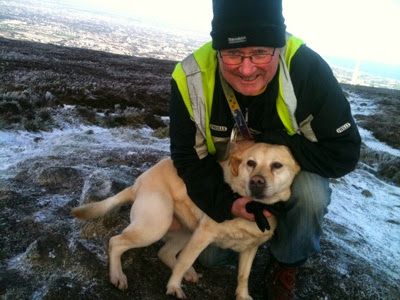
Slippy conditions with a mix of snow underfoot.
Saturday, January 17, 2015
Pope Francis in Philippines
Why have some of today's Irish newspapers not a word on the pope's visit to the Philippines?
Pope Francis' visit to Tacloban had to be cut short due to bad weather.
The visit is coverd in the Guardian, Der Spiegel online and indeed many other media outlets.
Pope Francis' visit to Tacloban had to be cut short due to bad weather.
The visit is coverd in the Guardian, Der Spiegel online and indeed many other media outlets.
Friday, January 16, 2015

Guardian gives thoughtful analysis of lives of chaos
Tuesday's Guardian newspaper carried a two-page spread on the perpetrators of the shocking and brutal deeds in Paris last week.
The headline on the story runs: "Broken homes to jail cells: chaotic lives of France's pioneers of jihad".
It's the story of grinding poverty, prison violence, non-stop chaos.
Dounia Bouzar, an anthropologist, who heads a centre to support families of French teenagers tempted by jihad or who have left for Syria said of Kouachi, one of the killers, "It's about transferring a feeling of malaise into a feeling of being all powerful".
If a portion of the money that is spent on weaponry and security were invested in the slums and poorhouses of Europe and the world might it be a different story?
If a hint of the drama and energy that is expended on security were given to building up the confidence and esteem of people in extreme poverty, there might never have been the Koucahi brothers.
Thursday, January 15, 2015
Pope Francis says you cannot insult faith of others
This from today's Guardian.
Pope Francis has said there are limits to freedom of expression and that following the Charlie Hebdo attack in Paris “one cannot make fun of faith”.
On a plane from Sri Lanka to the Philippines, the largest Catholic majority country in Asia, the pope said freedom of speech was a fundamental human right but “every religion has its dignity”.
Asked about the attack that killed 12 people at the offices of Charlie Hebdo – targeted because it had printed depictions of the prophet Muhammad – he said: “One cannot provoke, one cannot insult other people’s faith, one cannot make fun of faith.
“There is a limit. Every religion has its dignity … in freedom of expression there are limits.”
He gestured to Alberto Gasparri, who organises papal trips and was standing by his side, and added: “If my good friend Dr Gasparri says a curse word against my mother, he can expect a punch. It’s normal. It’s normal. You cannot provoke. You cannot insult the faith of others. You cannot make fun of the faith of others.”
Cautioning against provocation he said the right to liberty of expression came with the obligation to speak for “the common good”.
The pontiff also said he was convinced that global warming was “mostly” man-made and that man had “slapped nature in the face”. He expressed the hope that the upcoming Vatican encyclical – the most authoritative documents a pope can issue – on the environment, would encourage negotiators at the United Nations climate change conference in Paris in November to make courageous decisions to protect God’s creation.
A question for Dublin Bus
Written on the back of the 747 Bus Átha Cliath, Dublin Airport bus is the following: "up to every 10 minutes".
What does it mean? Does it mean that the longest a passenger has to wait is 10 minutes or is it a badly worded clause, which tries to say there is a 747 every 10 minutes?
Whatever it is meant to mean, it seems badly expressed.
What does it mean? Does it mean that the longest a passenger has to wait is 10 minutes or is it a badly worded clause, which tries to say there is a 747 every 10 minutes?
Whatever it is meant to mean, it seems badly expressed.
Wednesday, January 14, 2015
Vladimir Putin must be invited to Auschwitz
In two weeks time, January 27, there will a commemoration at Auschwitz to celebrate the 70th anniversary of the liberation of the Nazi death camp by the Red Army. The Soviet Army arrived on January 27, 1945.
Auschwitz was the epicentre of the German genocide of European Jews, with about 1.5 million murdered in its gas chambers.
It seems that Russian President Vladimir Putin has not been invited to attend.
That cannot make sense and EU leaders must sit down with their Russian counterparts and use the occasion to talk to one another.
A commemoration at Auschwitz wihtout the Russian President being present is a nonsense.
February 2 will be the 72nd anniversary of the success of the Red Army at Stalingrad on the Volga. It was there that the Red Army put a defnitive end to Nazi Germany.
In five months, one week and three days there were 2,150,000 casualties on the Volga. Is that not reason enough for Mr Putin to be invited to the former German death camp on Polish soil?
Geoffrey Roberts in his edited verison of Marshal Georgii Zhukov's autobiography, 'The Marshal of Victory' points out that Zhukov was probably the most important general in the second World War.
But for Zhukov and his army when would Auschwitz have been liberated?
Tuesday, January 13, 2015
A Christmas flashback and some 'dodgy' Christmases
The column below appears in this week's INM Irish regional newspapers.
Michael Commane
Christmas is over and almost forgotten about for another year. Cycling to work on the feast of the Epiphany, January 6, I spotted a Christmas tree in a window. I immediately experienced a flashback. I remember as a child the pure sadness of the Christmas tree coming down on January 6.
I can clearly remember standing in front of it and pleading that it be kept up another few days. But I also knew there was no point. Christmas was over and even as a child I knew any sort of pretence was pointless. The tree came down , back to school the next day and we got on with our lives.
Since the death of my father in 2004 there have been times when it’s not been easy, indeed, there were two or three dodgy Christmases but it’s much better now and I enjoy the day and what follows.
Over the Christmas season I came across a piece written by Fr Brendan Hoban, a priest in the diocese of Killala. He writes a weekly column in the Western People. This paragraph really resonated with me.
“Christmas is a strange time. It has a funny way of creating an empty space around us. Despite the hype, Christmas has a way of stripping our lives down to the essentials. In the midst of Christmas cheer, a small thin voice insists on posing a series of difficult questions: what does it all mean? Am I happy? What is my life for? How can I satisfy that itch within me? How can I satisfy that part of me that nothing seems to satisfy? How can I explain the wonder that I sometimes sense is at the heart of life? And we find ourselves putting our lives under a microscope. Wondering.”
I came up with a phrase this year when people asked me how Christmas was. I replied: “I was managing the emotional landmine that Christmas is”. It was meant as a joke, half serious, half real.
Early on Christmas morning, sometime around 07.00 I went for a walk with my dog in the local park. There was no one in the park, just Tess and I and still I could feel Christmas in my bones. Everything looked and smelled differently.
I was back thinking about my parents and the work they put into Christmas. They did everything for us, no matter how they felt inside.
Probably facetiously I say and think that Christmas is not the same without children but when I think about it, that makes no great sense. I think it has more to do with the innocence of children compared to the world of adulthood.
Anytime we talk about Christmas there is always the shadowy side of the feast expressed. We see and hear tv and radio ads asking us to watch out for those who may be vulnerable or alone. And those ads stay with us. They are effective. But the following incident hit me hard when I heard it and it so happens I was told it on the feast of the Epiphany.
A priest was standing at the back of the church greeting the people as they left after Christmas Mass. He was saying hello, shaking hands and wishing people seasons’ greetings. A woman came to him and said: “I have never felt so lonely.” He intended talking to her but before he got a chance she had disappeared. He later said to someone that it had really hit him.
Maybe in some extraordinary way Christmas is a kaleidoscope of our lives. Wondering, asking, questioning. Happy new year. And on we go.
Who to believe?
According to the BBC Radio 4 06.30 news today 35,000 people marched in Dresden protesting against the Islamisation of Europe. The PEGIDA demo in Dresden is now a Monday night event.
Thirty minutes later, the 08.00 Deutschlandfunk bulletin said that there were more demonstrations in Germany yesterday in support of pluralism and multi-cultural society than PEGIDA marches. German Radio said that 25,000 marched in Dresden opposed to the Islamisation of Europe
The BBC item was top of the news, Deutschlandfunk had it well down its bulletin.
Who to believe?
Monday, January 12, 2015
Hederman slams Oliver Callan's lampooning
Benedictine priest Mark Patrick Hederman and comedian Oliver Callan came head-to-head on the Seán O'Rourke Show this morning.
Hederman was most critical of how Oliver Callan lampoons President Michael D Higgins.
During the course of the programme the abbot of Glenstal referred to undertones in Callan's acts re the relationship between the President and his assistant Kevin McCarthy. Callan denied any such 'undertones' and said he did not know what Hederman was talking about.
The two men were on the Seán O'Rourke Show in response to a piece which appeared in yesterday's Sunday Independent, which was written by Mark Patrick Hederman.
The artile appears below.
"The idea that every home in Ireland should be subjected to this supposedly humorous depiction of the President, his wife and his assistant, Kevin McCarthy, seems to me to be a scandal that should cause shame to us all. This is no less than bullying and harassment in the workplace, which we are trying to phase out at every other level, but when it comes to the President and his wife, we seem to imply they are fair game.
Such lampooning of our President, his wife, and his assistant can no longer pass as entertainment. It enters the abusive area of 'slagging' which we are trying to eliminate from our schools throughout the country, from social media and the internet as an almost unstoppable plague.
Such personal insult can no longer be considered 'comedy', it has descended way below acceptable levels on that barometer. It is nothing less than toxic bullying, which is destructive of personality and deforms both its victims and its perpetrators, not to speak of its audience. What is it about us as Irish people that we sniggeringly feed on such dysfunctional humour?
Laughing at someone's height is unacceptable in general, but when it comes to the elected head of State, it enters an area of insult and defamation which undermines the prestige, authority and influence of the person elected to represent us.
The presence and unstinting efforts of both our President and his wife Sabina - who have undergone a punishing schedule of international visits, as well as encouraging appearances all over the country at various events - are of paramount importance to us at this time, and the kind of ungrateful and demeaning coverage we were treated to over the Christmas period is unacceptable.
It drains us and them of much needed energy and enthusiasm and it is corrosive of their self-confidence and self-respect, to the point of preventing them from accomplishing their essential task.
The danger is that in a person with the sensitivity of someone like Michael D Higgins, it induces a sense of disappointment and even disapproval on the part of the public. To make all that effort and push yourself to the edge in an attempt to fulfil the role you have been given by democratic vote, becomes counter-productive, not to say humiliating, when met by a constant barrage of cynical ridicule.
This kind of hectoring commentary and persistent harping upon personal traits, for which no one of us is responsible, gives no encouragement, no sympathy; its only purpose seems to be dismissive and polemical entertainment for the begrudgers."
Sunday, January 11, 2015
Favoured people
In today's Gospel on the feast of the Baptism of the Lord we read: "You are my son, the beloved, my favour rests on you."
Imagine how our world would look if people felt 'favoured' - all people, no exceptions and no privileges.
Imagine how our world would look if people felt 'favoured' - all people, no exceptions and no privileges.
Saturday, January 10, 2015
Marshal of victory
A headline in the Arts&Books section in today's Irish Times runs:
"The most important general you've never heard of?"
The article is a review of the newly published autobiography of Georgii Zhukov, edited by Geoffrey Roberts of University College Cork.
Marshal Timoshenko said of Zhukov that he was the only person who feared no one. He was not afraid of Stalin.
Book reviewer David Murphy argues that this new edition of his autobriography will give the reader an insight into one of the most important figures in the history of the second World War.
The spider and the fly
The slaying of a West Kerry fly on Friday evening, January 9, 2015.
There was a short ssish sound and the spider had its victim.
For the previous few minutes the fly had been flying about the room.
After the attack the spider managed to pull the fly up behind a wall picture.

There was a short ssish sound and the spider had its victim.
For the previous few minutes the fly had been flying about the room.
After the attack the spider managed to pull the fly up behind a wall picture.
Friday, January 9, 2015
So much cruelty
The words of Pope Francis yesterday at Mass:
"The attack in Paris yesterday makes us think of so much cruelty, human cruelty; of so much terrorism, both of isolated acts of terrorism and state-sponsored terrorism. The cruelty that man is capable of! Let us pray at this Mass for the victims of this cruelty. So many! And let us also ask for the cruel ones, that the Lord may change their hearts."
"The attack in Paris yesterday makes us think of so much cruelty, human cruelty; of so much terrorism, both of isolated acts of terrorism and state-sponsored terrorism. The cruelty that man is capable of! Let us pray at this Mass for the victims of this cruelty. So many! And let us also ask for the cruel ones, that the Lord may change their hearts."
RTE's French or German pronunciation?
Have you noticed RTE seems to be moving from the French to the German way of saying 'kilometre'?
And today Richard Downes outside Paris is also pronouncing the word in its German way.
And today Richard Downes outside Paris is also pronouncing the word in its German way.
Thursday, January 8, 2015
11.00, January 8, 2015
"God of hosts, bring us back:
let your face shine on us and we shall be saved."
A line from Psalm 79, read at today's Morning Prayer.
let your face shine on us and we shall be saved."
A line from Psalm 79, read at today's Morning Prayer.
The day Marlowe's article appeared in Irish Times
In yesterday's Irish Times, Paris correspondent, Lara Marlowe wrote a piece on Michel Houellebecq's latest book, 'Submission', which went on sale in France yesterday.
The book is about fictional figure Ben Abbes, a Muslim, who becomes French President.
The book has caused great upset among the French left and it featured in the most recent issue of Charlie Hebdo.
Little did Lara Marlowe know of what would happen on the day her piece appeard in The Irish Times.
The book is about fictional figure Ben Abbes, a Muslim, who becomes French President.
The book has caused great upset among the French left and it featured in the most recent issue of Charlie Hebdo.
Little did Lara Marlowe know of what would happen on the day her piece appeard in The Irish Times.
Wednesday, January 7, 2015
"I don't know"
"I don't know" is the most underrated sentence in the English language.
One of Paul Howard's AKA Ross O'Carroll-Kelly's life lessons for each of his 44 years. The 44 are listed in yesterday's Irish Times.
Dominican theologian Fr Philip Gleeson seldom gave a lecture without saying: "Ah, I don't know." And he is a great teacher.
One of Paul Howard's AKA Ross O'Carroll-Kelly's life lessons for each of his 44 years. The 44 are listed in yesterday's Irish Times.
Dominican theologian Fr Philip Gleeson seldom gave a lecture without saying: "Ah, I don't know." And he is a great teacher.
Tuesday, January 6, 2015
A church with far too many sycophants and careerists
The piece below appears in this week's INM Irish regional newspapers
Michael Commane
Michael Commane
Here are two quotes. The first is from what Pope Francis said to the curia before Christmas and the second quote is from a document produced by the German Bishops' Conference.
"The disease of deifying leaders: it is the disease of those who court superiors, hoping to get their benevolence. They are victims of careerism and opportunism, they honour people and not God (Matthew 23: 8 - 12). They are people who live their service thinking only what they deserve to get and not what they have to give. Petty people, unhappy and inspired only by their fatal selfishness (Galations 5: 16 - 25). This disease may also affect superiors when they court some of their colleagues to get their submission, loyalty and psychological dependence, but the end result is a true complicity."
And then this from the German bishops.
“For many practising, committed Catholics in Germany, the pastoral approach to remarried divorcees is the test case for an evangelising church which is not only for special groups of faithful but which also welcomes those whose life projects have failed. It has become the touchstone of whether the joy of the Gospel also holds good for remarried divorcees and their families."
Reading what both the pope and the German bishops have to say set me thinking. The word 'orthodoxy' kept turning in my head. I checked the dictionary on the word and this is what it says: "Hold correct or the currently accepted opinions, especially on religious doctrine, not heretical or independently-minded or original."
Now just imagine if a priest uttered an unorthodox word about some of the 'old chesnuts' in that large bag of 'doctrinal no-nos' or indeed, if he were critical of his bishop of provincial? It is most likely that the man would be called to account for himself.
Of course I can hear many people say that you have to have authority and discipline structures in every organisation. And yes, that's true but has there been over the last 30 or so years in the Catholic Church an intolerable level of authoritarianism?
The system of how bishops have been appointed right across the Catholic Church during the last two papacies is certainly not the best way of doing things. And 'custom and pracitce' has shown us how inadequate the system is. The 'safe pair of hands' has done nothing for the church, nothing at all. Indeed, it seems Pope Francis has an issue with it. It is going to be interesting to see the first crop of bishops, who will soon begin to appear under the papacy of Francis. The new man in Chicago, Blase Cupich looks an interesting choice.
The tone of what the German bishops have to say about people in second relationships is heart warming and must give hope to those who pray to an open and forgiving God.
How great it would be to see far more of a church that stressed prudence and compassion over authoriatanism and discipline.
The famous Dominican theologian and saint Thomas Aquinas places great stress on the virtue of prudence. It's in many ways the log book of the wise person. It's a matter of being guided by wisdom - a middle way.
It's important to note that Pope Benedict spent most of his formative years living under the tyranny of Nazi ideology. John Paul ll was 19 when Nazi Germany invaded Poland and then he spent over 30 years living in a communist-run dictatorship.
Observing what is going on in the Catholic Church these days I must admit I'm wondering how much energy and time has been spent around the cult of the person. How many of the ruling elites within the church are driven by sycophancy and careerism? It seems Pope Francis is spotting a lot of it.
Big changes on the way? Great. And about time too.
Monday, January 5, 2015
On track - sort of
Below is Saturday's Irish Times' 'An Irishman's Diary', written by Patrick Logue.
A nice piece. But Patrick on what Irish Rail trains can one open the windows? And the 2001 rail strike was not the action of the NBRU. The dispute was the work of the now defunct ILDA, whose genneral secretary was Brendan Ogle.
"I went to see the doctor recently with a persistent cough. It had been niggling at me for a while, especially in the morning, and I needed the peace of mind that it wasn’t anything sinister. The doctor stuck a pipe up my nose that then went down the back of my throat and the camera at the end told him, and me, that nothing was very wrong. He told me I could be suffering from something called globus sensation, gave me a prescription and told me to avoid sugary foods and beer, particularly last thing at night. Working on that.
What he didn’t tell me was that an irritable man on the 8.24 Enterprise train from Drogheda to Dublin on a particular Tuesday morning would ask me to “stop coughing in that manner”.
I couldn’t believe it. A fellow passenger sitting opposite me was annoyed with the way I was clearing my throat, seemingly over and over again, and decided to “tackle” me in the most public way possible.
Spluttering
“Are you seriously taking issue with the way I’m coughing on public transport?” I asked. “Absolutely”, he responded, “it gets wearing after a while”, before shutting his eyes and falling back asleep. Now, I hadn’t been spluttering in his face or anything close to that and it was clear that other passengers in the vicinity got the whiff of a serious row. I was furious and in my mind’s eye I was hurling serious personal insults at this man.
But I managed to keep my cool and rise above it. I woke him up to continue the conversation. “I’ve been to the doctor with this cough, you know”, I added, as fellow passengers glanced over but made sure not to get involved in an argument between two strangers on a morning commuter train. He wasn’t interested in apologising or re-engaging.
I went back to my Facebook and reading the newspaper on my phone, my cool having been kept. Just about, mind you. On leaving the train in Connolly Station, I couldn’t help getting the last word. “I hope the rest of your day goes better than the last half an hour”, I said. “No need to be nasty”, he replied.
I worked out recently that over the last 15 years of commuting between Drogheda, Co Louth, and Dublin city centre, I have spent the equivalent of almost an entire year of my life travelling on a train. Over 15 years, allowing for holidays, weekends, bank holidays and sick days (the odd cough, and the like), I have spent what is a staggering 7,000 hours sitting or standing on a train carriage simply to get to and from the office.
Commuting puts you in contact with all sorts of people, some of them a little strange.
A while back, a fellow passenger emailed my boss to take issue with the contents of a private email I had sent to a colleague from my iPad. She had read the email over my shoulder, taken a particular remark out of context and became so outraged with it she decided to contact The Irish Times.
Ms Revenue Scrooge
This morning on RTE's John O'Rourke Show there was a piece on property tax and advising people about deadlines and how to pay.
Right through the interview with a senior civil servant from Revenue listeners were given a 1800 number to call.
After the interview RTE corrected the number and told listeners it was a 1890 number.
1800 is toll free, 1890 is a pay number. How mean. And certainly a PR no no.
Right through the interview with a senior civil servant from Revenue listeners were given a 1800 number to call.
After the interview RTE corrected the number and told listeners it was a 1890 number.
1800 is toll free, 1890 is a pay number. How mean. And certainly a PR no no.
Sunday, January 4, 2015
Pejorative 'Alive' headline
On the strap line of the January issue of the free sheet 'Alive' readers are invited to turn to page six and read the story "Case exposes 'gay' grip on US politics". The teaser includes a picture of US President Barack Obama.
The headline sounds pejorative.
But it's the irony that is so notable. Is the proprietor/editor of 'Alive' aware of the number of homosexuals who are members of his organisation?
Whether a person is hetero or homosexual is irrelevant. But the way 'Alive' refers to the issue is most worrying.
What numbers of priests are gay men? It's not an issue but the dishonesty that surrounds the issue is not helpful.
UPC and the price of water
The television, broadband, phone supplier UPC has announced price increases.
The latest increases work out at 10 per cent. It is the third set of increases within two years. Last year's price rise worked out at 14 per cent.
Has anyone heard a murmur of complaint about UPC's price hikes?
Aproximatley half a million users will be affected. People are paying sums of €170 per month to UPC.
Not a word, even a whisper of protest and a government on its knees because it plans charging for the use of water.
Maybe Irish Water should employ UPCs PR executives.
A funny old country indeed.
Saturday, January 3, 2015
Using words to help make the world a better place
The piece below appears in today's Irish Times.
Michael Commane
On Christmas Eve three little children were sitting on the back seat, upstairs on a Bus Átha Cliatha bus. Their parents were sitting in the seat in front of them.
At one stage one of the three children, a little boy, spotted a Christmas tree in the window of a house. He shouted out, “Look at that tree isn’t it beautiful”. They were his exact words. At most he was six. And it was because of his young age that the formula of words he used caught my attention. It was really a powerfully strong statement.
This little boy saw something that pleased his eye and he was able to describe it in such perfect terms. I too looked at the tree, which was inside the window of a house, and yes, it looked good and there was a fine proportion to it. It was also delicately decorated.
Over the last days we have heard much about how the Word is associated with God. In tomorrow’s Gospel, (John 1: 1- 18) one of the world’s finest pieces of literature, St John begins his work with “In the beginning was the Word. And the Word was God; he was in the beginning with God. All things were made through him and without him nothing came to be."
These days we celebrate our belief that the Incarnate Son of God, who is born in Bethlehem, is God’s definitive Word. We believe that through his life, words and actions we know something more about God.
That little boy on the Number 14 bus on Christmas Eve had no idea the joy that he gave to people in his loud exclamation of beauty. But he certainly brought a smile to many of his fellow passengers. May his words go on to bring smiles to the faces of many people during the span of his life.
In so many ways our words define us. The words we use to other people and the words we hear from other people play a significant role in defining who and what we are. The moment someone opens their mouth we can get a picture or an opinion of who they are.
Words are important. God’s Word is of ultimate importance.
There is an old adage which goes: “Don’t do as I do but do as I say”. There might well be an element of hypocrisy in it but nevertheless it does place a great emphasis on the words we use. It gives an importance to words. And so it should.
The beginning of a new year might well be an opportune time to decide to use words to build people up rather than knock them down. A time to use words to convey what we mean. A time to decide that our words will be real and vital and have nothing at all to do with cliché or pious waffle.
It’s easy to criticise, complain, castigate and throw cold water on words, and ideas. At times it’s difficult to be positive. But somehow or other if we could remind ourselves that we are all made in the image and likeness of God we might find ourselves in a position to be more positive towards other people and their ideas. We might realise that our positive words have a far better chance of building up the spirit and confidence of people than any negative or nasty words we may tend to use.
Living and spreading the Word of God might well be a starting point.
The words that little boy used on the 14 bus brought a smile to people's faces. He inspired.
May your words and my words help make our world a better place. So, a fruitful and prosperous new year to all.
Friday, January 2, 2015
Hans Fallada's Iron Gustav is a book not to be missed
Hans Fallada's 'Iron Gustav' gives a detailed account from the perspective of a family in Berlin, what happened in Germany from 1914 onwards.
The book was first published in 1938 but the first full edition was published in 1962, with the revised edition published in Penguin Classics in 2014.
Its insights in explaining what happened are simply brilliant.
Worryingly, it may have something to say about our times too.
Some months back Eileen Batterrsby seemed to have been fulsome in her praise of the book. Not at all, it is a brilliant read and not to be missed.
Thursday, January 1, 2015
Challenge to old order
A decade and a half into the 21st century, we’re still living through the aftermath of two epoch-making shocks. The first was the demonstration of the limits of US power in the killing fields of Afghanistan and Iraq – the war on terror that broke the spell of invincibility of the world’s first truly global empire. The second was the financial crash of 2008 and the crisis of the western-dominated economic system it unleashed, still playing havoc with economies and lives across the world more than six years later.
That crisis will shape politics in Europe in 2015, from London to Madrid. But the impact will be felt first in Athens. The slump and stagnation that followed the crash has already fuelled the rise of the populist right. Now, after years of self-defeating austerity and falling living standards, the radical left has leapfrogged ahead to challenge for power in the most devastated eurozone economies of Greece and Spain.
It was a backlash waiting to happen. In Greece the leftwing Syriza party, which rejects the austerity enforced across the eurozone by its unelected troika, is favourite to win the snap elections called for the end of January. Syriza may have stepped back from its one-time demand for unilateral debt cancellation, its programme to boost living standards in the wake of a 1930s-style depression may be modest, and mainstream voices across Europe may also be calling for a change of direction. But Europe’s governing elites will have none of it.
Expect a ferocious campaign to terrify Greek voters, who have already been warned by the European commission’s Jean-Claude Juncker not to vote the “wrong” way. If Greeks still insist on making their own democratic choice, everything will be done to force Syriza to retreat. If all else fails, Greece will be punished for fear that others, such as Spain’s new Podemos party, might go down the same route later in the year.
The powers that be in Europe are determined to prop up a failed economic model regardless of the cost – as they will be in Britain if Labour wins the general election in May. The aftershocks of the breakdown of that neoliberal regime are still being felt across the world economy – in falling commodity prices, capital flight, stagnation and recession. But the interests that depend on it won’t let go without a serious challenge.
That’s just as true in terms of global power. The US and its satellites, including Britain, may have suffered a strategic defeat in Iraq and Afghanistan – symbolised by last weekend’s ceremony to mark the end of Nato’s combat mission, held in secret for fear of Taliban attacks. But they’re not letting go either. Some 13,000 troops are staying on as “trainers”, just as thousands of western troops have been returning to Iraq for the war against Isis – the al-Qaida breakaway spawned by their own invasion and occupation – with talk of a major assault in the spring.
In the same spirit, every effort was made at the time of the Arab uprisings of 2011 to hijack, control or crush them. Some of the results can be seen today in the disaster zone across the Middle East, the growing power of the western-backed autocracies of the Gulf, the brutality of Egypt’s new dictatorship and the maelstrom in post-intervention Libya, whose civil war is likely to intensify in the coming months.
Meanwhile, Russia’s challenge to untrammelled US strategic power, which began in Georgia in 2008 and intensified through Syria’s proxy war, has come to a head in the conflict in Ukraine. There has been much western crowing in recent weeks that the combination of collapsing oil prices with US and EU sanctions has plunged Russia into recession, while knocking chunks out of the economies of other independent oil states such as Iran and Venezuela into the bargain. It seems clear enough that the Saudi regime’s decision to boost oil output when prices were already falling was designed not only to protect market share and undercut fracking, but to punish Iran and Russia for their role in the Middle East and Europe to the benefit of Riyadh’s US sponsor.
It is a form of economic warfare – hailed by President Obama this week as the fruit of “strategic patience” – the consequences of which will be felt across the world in the months to come. But along with the global power and economic shocks of the past decade, two other crucial shifts have defined the early 21st century: the economic rise of China, in defiance of market orthodoxy, and the tide of progressive change that has swept Latin America, opening up alternatives to neoliberal capitalism.
Both have continued despite the backwash from the crash, which has taken its toll on the “Brics” countries and the wider global south. Progressive governments have carried on being elected from Bolivia to Brazil, while China’s slowing growth rate is still almost double that delivered by the US recovery. Political and financial pressure on Venezuela, which has been crucial to Latin America’s transformation and already faces serious economic problems, however, looks set to increase in the coming year. The key to riding the storm, as elsewhere, will be who is made to shoulder the burden of falling income and reform.
What seems certain though is that, however much the west tries to recapture lost ground, the global order will not revert to the status quo ante. There may be growing conflict, but there will be no return to unchallenged US diktat or uncontested economic catechisms. Alternative centres of power are forming. Both internationally and domestically, the old order is coming apart. The question will be what replaces it.
For Putin Crimea shows its love for the fatherland
In his new year address in Moscow President Vladimir Putin referred to the events in Crimea. He said: "This event will forever remain an important milestone in the history of the fatherland.
"In their decision to rejoin their homeland the citizens of Crimea have shown their love for the fatherland," Mr Putin said.
"In their decision to rejoin their homeland the citizens of Crimea have shown their love for the fatherland," Mr Putin said.
Subscribe to:
Posts (Atom)
Featured Post
The short lived life of a publication that opened no doors
On August 8 the following appeared in Occasional Scribbles: " This blog has heard from a reliable source that the free-sheet, The Key, ...
